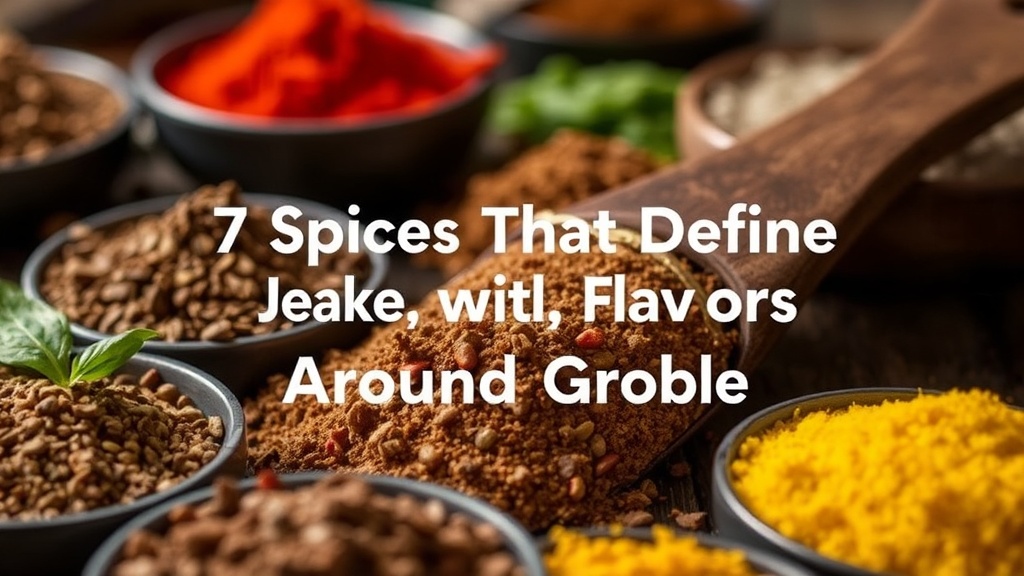
7 Spices That Define Regional Flavors Around the Globe

The Warmth of Cinnamon in Middle Eastern Sweets
Smoked Paprika and the Soul of Spanish Cooking
Star Anise: The Fragrant Heart of Southeast Asian Soups
Turmeric and the Golden Traditions of India
Cumin's Journey Through Mexican and North African Kitchens
Cardamom: The Queen of Nordic and Indian Aromatics
Black Pepper: The Spice That Built Empires
A small wooden bowl sits on a table in a crowded market in Marrakesh. Inside, a deep crimson powder—paprika—is being mixed with cumin and ginger. A few miles away, in a kitchen in Kerala, the air is heavy with the scent of black pepper and cardamom. These aren't just ingredients; they are the fingerprints of a culture. This article examines seven specific spices that define regional identities and how they arrived in our kitchens.
Understanding these spices helps you cook with intention. When you know why a certain spice defines a region, you stop just following a recipe and start understanding the history of the plate. We'll look at the migration of flavors and the specific profiles that make certain cuisines recognizable from a mile away.
What are the most important spices in Indian cuisine?
Turmeric and Black Pepper are the foundational spices that define the flavor profile of Indian cooking. While many people think of "curry powder" as a single thing, real Indian cooking relies on the distinct, earthy punch of turmeric and the sharp heat of peppercorns.
Turmeric is more than a coloring agent. It provides a subtle, bitter warmth that anchors much of the subcontinent's cooking. You can find high-quality versions of this spice through the botanical records on Wikipedia, which detail its historical use in both medicine and food.
Black pepper, on the other hand, was once so valuable it was known as "black gold." It provides a slow-building heat that differs from the immediate sting of a chili pepper. If you've ever wondered why certain dishes feel "warm" rather than "hot," it's often the peppercorns doing the heavy lifting.
"To understand a spice is to understand the soil it grew in and the people who traded it."
Which spice defines the flavor of Mediterranean cooking?
Saffron is the most distinctive and expensive spice that defines the high-end flavor profiles of Mediterranean regions, particularly in Spain and Italy. It offers a floral, honey-like aroma that can't be replicated by any synthetic substitute.
Using saffron requires a delicate touch. A little goes a long way—too much and your dish will taste medicinal. It’s a spice that demands respect in the kitchen.
When I worked in professional kitchens, I saw how much a single pinch of high-quality saffron could change a risotto or a paella. It isn't just about the yellow color; it's about that deep, aromatic complexity. It’s a lesson in patience. You often have to steep the threads in warm liquid to truly release their potential.
A Quick Comparison of Spice Profiles
To help you understand how these spices function differently in a recipe, I've put together this quick reference guide.
| Spice | Primary Flavor Note | Common Regional Use | Intensity Level |
|---|---|---|---|
| Turmeric | Earthy, Bitter | South Asia | Low Heat / High Color |
| Saffron | Floral, Honey | Mediterranean/Middle East | Subtle/Complex |
| Cinnamon | Sweet, Woody | Middle East/North Africa | Warm/Aromatic |
| Smoked Paprika | Smoky, Sweet | Spain/Eastern Europe | Medium Heat |
How much does Star Anise affect Asian-style broths?
Star Anise provides the signature licorice-like aroma that is indispensable in many East and Southeast Asian broths and braises. Without it, a traditional Vietnamese Pho or a Chinese five-spice blend simply wouldn't taste "right."
It's a potent spice. You'll notice it's often used whole—toasting the star in a dry pan before adding it to a simmering liquid is a common technique to deepen the flavor. This process wakes up the essential oils.
I remember a chef in Hanoi teaching me that the key to a great broth wasn't just the meat, but the way the star anise interacted with charred ginger and cinnamon. It creates a sense of depth that makes a liquid feel substantial. It’s a heavy-hitting ingredient.
If you're interested in how heat changed these regions, you might find it interesting to read about how chili peppers changed the world's flavor profiles. The interplay between the sweetness of star anise and the heat of chilies is a classic culinary balance.
What makes Smoked Paprika a staple in Spanish cooking?
Smoked Paprika, or Pimentón, provides a deep, smoky foundation for many Spanish dishes and stews. It’s much more than just a colored powder; it brings a sense of fire and wood to the dish without actual smoke.
There are different grades of Pimentón. You might see *Dulce* (sweet), *Agridulce* (bittersweet), or *Picante* (spicy). Using the wrong one can throw off your seasoning entirely.
In my time in commercial kitchens, I saw many cooks reach for generic paprika when they should have been using a high-quality Pimentón de la Vera. The difference in depth is night and day. One is a garnish; the other is a fundamental ingredient.
The Role of Cinnamon in Sweet and Savory Traditions
Cinnamon is one of those rare spices that bridges the gap between the dessert tray and the dinner plate. In the Middle East, it’s frequently used in savory meat dishes, while in much of the West, it's synonymous with sweetness.
This versatility is why it's so widely traveled. It’s a warm, woody spice that can ground a heavy meat dish or brighten a fruit-based dessert.
When you're cooking, try thinking about how cinnamon can act as a bridge. It can tie together disparate flavors in a way that feels cohesive rather than jarring.
- Turmeric: Best used in early stages of cooking (often with oil and aromatics).
- Saffron: Best steeped in warm liquid before adding to the dish.
- Star Anise: Best toasted whole to release oils.
- Smoked Paprika: Best added to fat to bloom the flavor.
- Cumin: A staple for earthy, savory depths.
- Black Pepper: A finishing spice for immediate heat.
- Cinnamon: Useful in both sweet and savory applications.
Each of these spices tells a story of trade routes, colonial history, and local agriculture. When you reach for them, you aren't just adding heat or color. You're pulling from a lineage of flavor that has been refined over centuries.
The next time you're at a market, look closely at the textures and colors of these spices. They are more than just pantry items. They are the building blocks of global culture.