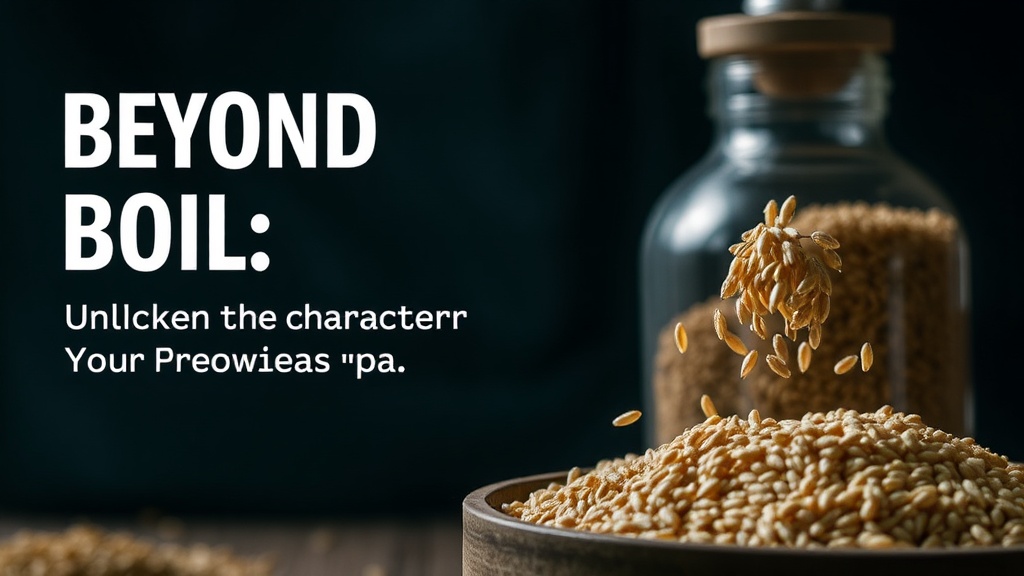
Beyond the Boil: Unlocking the True Character of Your Favorite Grains

Why do my grains always turn out mushy or hard?
The answer often lies in a blend of factors: incorrect water ratios, improper heat management, and neglecting post-cooking care. We tend to treat all grains as interchangeable, but a grain of basmati rice, for example, behaves very differently from a farro kernel. Their starch composition, hull thickness, and even their age all influence how they absorb water and respond to heat. Understanding these individual characteristics is the first step toward consistent, delightful results. It’s about moving past a single formula and embracing the subtle science and traditions behind each grain.
1. The Ritual of the Rinse: For Clarity, Not Just Cleanliness
Before you even think about heat, consider rinsing. For many rice varieties—especially long-grain white rices like jasmine or basmati—a thorough rinse under cold running water is transformative. What are we washing away? Excess surface starch. This starch, if left unchecked, can lead to a sticky, clumpy mess. The goal isn't just cleanliness; it’s about achieving distinct, individual grains that boast a pleasant, firm texture. Cultures across Asia, where rice is a staple, have perfected this ritual over millennia, recognizing its impact on the final dish. Think of the delicate pilafs of the Middle East or the fluffy rice served alongside a Thai curry—their success often begins with a proper rinse. You'll know you’ve rinsed enough when the water runs clear.
2. To Soak or Not to Soak: A Primer in Patience
Pre-soaking isn't always necessary, but for certain grains, it’s a game-changer. Legumes, wild rice, farro, and even some varieties of brown rice benefit significantly from a pre-cook soak. Why bother? Soaking initiates hydration, drastically reducing cooking times. It also helps to soften tougher outer layers, leading to a more tender, evenly cooked result. Beyond texture, soaking can improve digestibility and nutrient availability by breaking down compounds often referred to as "anti-nutrients." While some claims about anti-nutrients are overstated, a good soak can definitely make grains more amiable to your digestive system. For more on the science of soaking, you might find this explanation helpful: