Bio‑Harmony: Sync Your Meals with Your Body Clock for Energy

What Happens When Your Meal Times Clash with Your Internal Clock?
Ever notice that a late‑night pizza leaves you groggy the next morning, while a bright‑early bowl of oatmeal seems to power you through the day? That’s your circadian rhythm sending a quiet signal about when to eat. When we eat out of sync, hormones like insulin and cortisol get confused, and the metabolic engine sputters.
Why Does the Body Care About When You Eat?
Research shows that the master clock in the brain (the suprachiasmatic nucleus) coordinates peripheral clocks in the liver, gut, and fat cells. Meal timing is a major zeitgeber – a “time‑giver” – that can either reinforce or disrupt those peripheral rhythms. Chrononutrition studies link early‑day eating to better insulin sensitivity, lower inflammation, and even a modest boost in lifespan.
How Can You Build a Bio‑Harmony Eating Pattern?
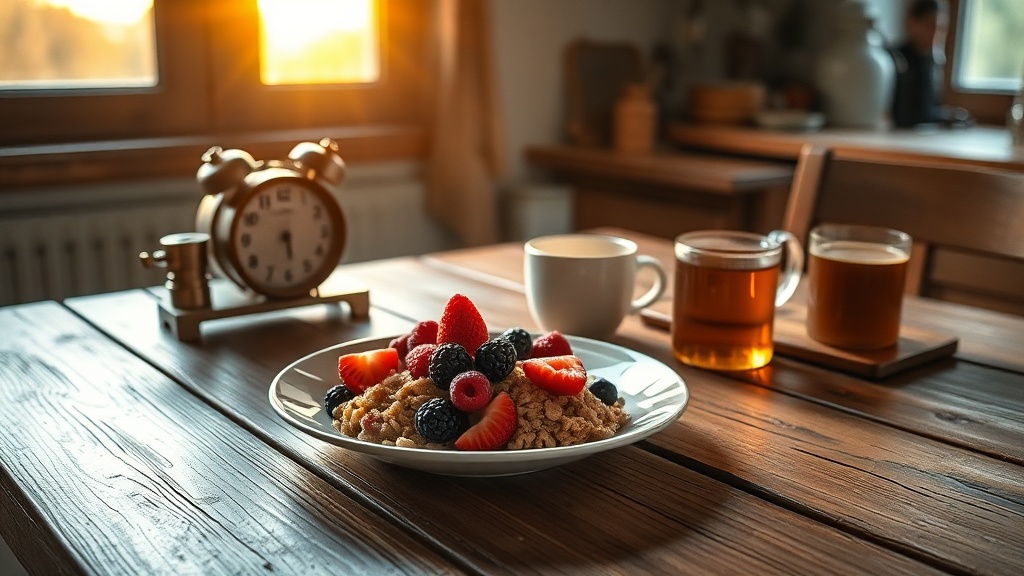
- Front‑Load Your Calories. Aim to get 40‑50% of daily calories before 2 p.m. My own routine starts with a hearty oatmeal‑berry bowl at sunrise, followed by a protein‑rich lunch.
- Respect the Evening Fast. Finish the last substantial meal by 7 p.m. A light dinner of roasted vegetables and a small portion of whole‑grain rice lets the gut wind down.
- Mind the Macronutrient Clock. Carbs work best earlier (they’re turned into glucose when the body’s insulin response is strongest). Save heavier fats for the afternoon when digestion is slower.
- Stay Consistent. Even on weekends, keep the same “eating window” (e.g., 8 a.m.–7 p.m.) so the internal clock doesn’t get confused.
What Are the Proven Benefits of Chrononutrition?
Studies from Wiley’s comprehensive review report that aligning meals with circadian rhythms can:
- Improve blood‑sugar control – up to 15% lower fasting glucose.
- Reduce evening appetite, helping with weight management.
- Boost daytime alertness and physical performance.
- Potentially extend health‑span by synchronizing metabolic pathways.
How Do I Adjust My Routine for Shortening Days This Fall?
As daylight fades, many of us instinctively eat later. Counter that by using artificial light cues: keep your kitchen bright in the morning and dim it after sunset. I set a soft amber lamp for dinner, signaling my body that it’s time to wind down.
What’s a Simple First Step?
Start a “food‑clock journal” for a week. Note the time you eat, what you ate, and how you felt an hour later. Look for patterns – you’ll likely see a dip in energy after late‑night carbs.
Takeaway: Your Next Move
Give your body the rhythm it craves: eat a nourishing breakfast before 9 a.m., keep lunch balanced, and finish dinner early. Track, adjust, and notice the steady lift in energy and focus. Eat the History. Meet the Maker. Cook the Story.