Chicago's Jibarito Is Migration You Can Hold in Two Hands

You hear it before you see it: hot oil cracking around green plantain, a metal press thumping, somebody in the back line shouting for more steak. That sound is Chicago too.
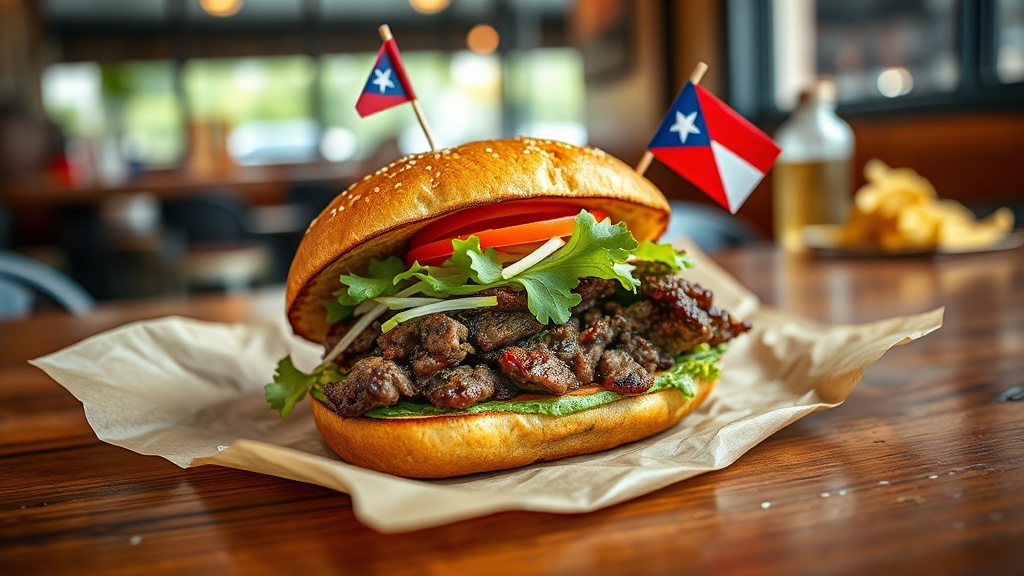
If you only know this city by deep dish and hot dogs, you are missing one of its most honest sandwiches. The jibarito is not built on bread. It is built on two smashed, fried green plantains holding garlicky steak, lettuce, tomato, and cheese. It tastes like Puerto Rico and Humboldt Park at the same time.
Where It Came From (And Why the Date Gets Messy)
Most accounts in Chicago trace the jibarito to Juan "Pete" Figueroa at Borinquen Restaurant in Humboldt Park, where it was put on the menu in the mid-1990s, usually cited as 1996.
There is also an earlier thread from Puerto Rico: a plantain sandwich known as sandwich de platano at Platano Loco in Aguada, with claims dating to 1991. Those two stories do not cancel each other out. They explain each other.
Here is my read: Puerto Rican cooks made the core idea; Chicago gave it its street identity, its name, and its citywide life.
The real hero here is the cook who looked at a no-bread problem and solved it with plantain.
Why the Jibarito Matters More Than "Novelty Sandwich" Lists
People love to treat the jibarito like a stunt. I think that misses the point.
This sandwich is a migration document. Chicago has one of the largest Puerto Rican communities in the continental U.S., and Humboldt Park has long been a cultural anchor. The jibarito tells that story in kitchen language: carry what you can, adapt what you must, keep the flavor logic intact.
Plantain in place of bread is not a gimmick. It is a decision with memory behind it.
Suitcase to Stovetop: A Weeknight Jibarito You Can Actually Pull Off
I have cooked this in apartment kitchens with weak vent hoods and one decent skillet. You can do this in 45 minutes.
Ingredients (Makes 4 Sandwiches)
- 4 green plantains (firm, mostly unripe)
- Neutral oil for frying
- 1 lb flank or skirt steak, thinly sliced
- 4 garlic cloves, minced
- 1 teaspoon kosher salt, plus more to taste
- 1 teaspoon black pepper
- 1 teaspoon dried oregano
- 1 tablespoon white vinegar
- 2 tablespoons olive oil
- 1/2 cup mayonnaise
- 1 tablespoon fresh lemon juice
- 4 slices mild white cheese or provolone
- 1 tomato, sliced
- 1 cup shredded lettuce
Method
Season the steak.
Toss sliced steak with half the garlic, salt, pepper, oregano, vinegar, and olive oil. Rest 15 minutes while you prep plantains.
Prep plantains.
Peel green plantains and cut each in half crosswise, then slice each half lengthwise into two thick planks.
First fry.
Heat 1 to 1 1/2 inches of oil in a deep skillet to about 325F. Fry plantain pieces 3 to 4 minutes until pale gold and just tender. Drain briefly.
Smash.
Press each piece between parchment with a heavy pan until about 1/4 inch thick. Think tostone, but shaped like sandwich "bread."
Second fry.
Raise oil to about 360F. Fry smashed plantains 2 to 3 minutes until crisp-edged and deeply golden. Salt immediately.
Garlic mayo.
Mix mayo, remaining garlic, lemon juice, and a pinch of salt.
Cook steak hot and fast.
Sear in a ripping-hot skillet 2 to 4 minutes total so it stays juicy. Taste and adjust salt.
Build.
Plantain, garlic mayo, cheese, steak, lettuce, tomato, more garlic mayo, second plantain. Serve immediately while the plantain shell still crackles.
Two Non-Negotiables
- Use green plantains. Yellow plantains go sweet and soft.
- Do the double fry. The second fry is what gives you structure.
If You Are Eating One in Chicago This Weekend
Go where Puerto Rican families are already ordering, not where the menu reads like a social media checklist. Ask who has the best garlic hand with the steak. Then listen more than you speak.
You are not "discovering" anything. You are joining a line that has been moving for decades.
Lesson from the Table
The jibarito is what happens when tradition travels without asking permission. One city receives it, reshapes it, names it, and sends it back out into the world.
That is food history in real time: not frozen, not polished, just alive and frying.