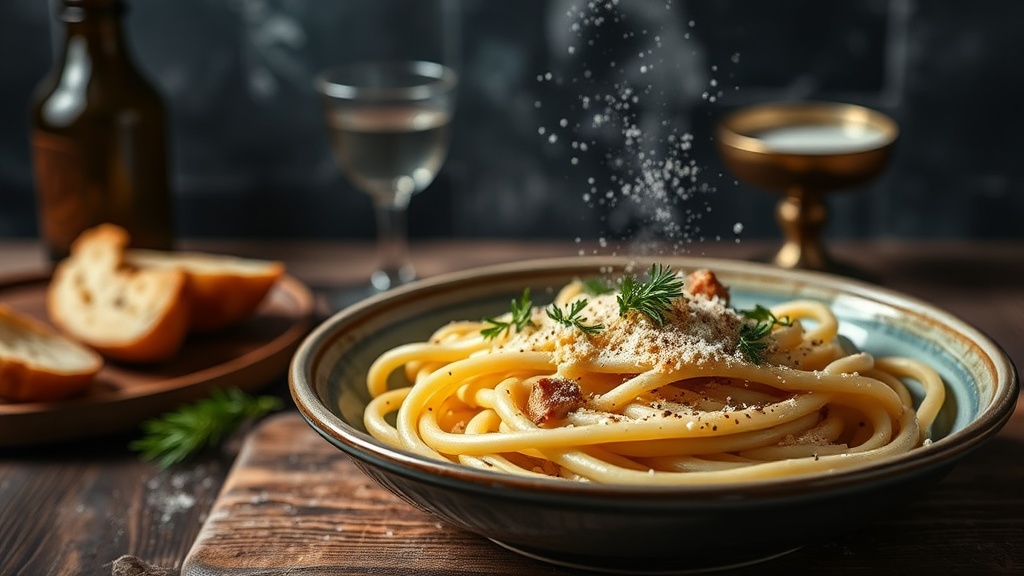
Creamy Homemade Carbonara: Authentic Roman Pasta in 20 Minutes

This post covers everything needed to make authentic Roman carbonara at home—ingredients, technique, common mistakes, and the history behind Italy's most misunderstood pasta. You'll learn why the real dish contains no cream (despite its creamy texture), how to achieve that silky sauce without scrambling the eggs, and why this 20-minute recipe rivals anything served in Rome's trattorias.
What Is Authentic Carbonara Made Of?
Authentic carbonara contains exactly five ingredients: pasta (usually spaghetti or rigatoni), guanciale (cured pork jowl), egg yolks, Pecorino Romano cheese, and black pepper. That's it. No cream. No garlic. No onions. No parsley garnish.
The confusion about cream likely stems from the dish's remarkably creamy texture—that smooth, glossy sauce coats each strand of pasta in a way that seems impossible without dairy. But here's the thing: that silkiness comes from an emulsion. Hot pasta water, rendered pork fat, egg yolks, and cheese combine through vigorous tossing to create something that looks and tastes like the richest Alfredo you've ever had. Except it isn't.
Guanciale deserves special mention. This Italian cured meat comes from the pig's jowl, not the belly like pancetta. It carries more fat and a deeper, funkier flavor than its more famous cousin. When slowly rendered, guanciale releases fat that forms the foundation of the sauce. The crispy meat bits (called guanciale croccante) provide textural contrast.
Can't find guanciale? Pancetta works in a pinch—but it's a substitution, not an equivalent. Bacon, while common in American adaptations, introduces smoke that overwhelms the delicate balance. The Romans would wince.
Why Does Carbonara Sauce Scramble (and How Do You Prevent It)?
Carbonara sauce scrambles when egg proteins cook too quickly, typically from excessive heat or direct contact with a hot pan. The solution involves tempering—gradually raising the egg temperature before full incorporation—and working quickly off the heat.
The technique matters more than the recipe. Here's the method that works in professional kitchens and Roman homes alike:
- Cook the pasta in salted water—less than you think, about 1 tablespoon per liter. The pasta water needs to be starchy, not salty.
- Render the guanciale slowly over medium-low heat until the fat melts and the meat crisps. This takes 7-10 minutes. Don't rush it.
- Whisk egg yolks and Pecorino with plenty of freshly cracked black pepper in a separate bowl. Some recipes add a splash of cold water here—it helps control temperature later.
- Transfer pasta directly from pot to pan with the guanciale, carrying starchy water with it. Toss vigorously for 30 seconds. The pasta should be al dente and hot.
- Remove from heat completely. This step cannot be emphasized enough. The pan should not be on a burner.
- Pour the egg mixture over the pasta while tossing constantly. Add splashes of reserved pasta water as needed. The residual heat cooks the eggs gently, creating sauce rather than breakfast.
If you see curds forming, you've gone too far. The catch? There's no fixing scrambled carbonara. Start over with fresh eggs and accept the lesson.
What's the History Behind Carbonara?
Carbonara emerged in Rome during the mid-20th century, though its exact origins remain contested among food historians. The name likely derives from carbonaro—Italian for charcoal burner—suggesting the dish sustained workers in the Apennine mountains.
Another theory connects carbonara to Allied liberation of Rome in 1944. American soldiers carried bacon and powdered eggs in their rations. Roman cooks, facing scarcity, combined these ingredients with local pasta and aged cheese. The result satisfied both starving locals and homesick GIs.
What's undeniable: carbonara belongs to the cucina povera tradition—"poor cooking" that transforms humble ingredients into something transcendent. Before refrigeration, preserved pork and aged cheese provided protein and flavor during lean months. Eggs offered accessible nutrition. Black pepper, once worth its weight in gold, added heat and complexity.
This dish exemplifies how migration and necessity shape cuisine. The American military presence introduced new ingredients. Post-war economic recovery brought guanciale back to Roman tables. Today, carbonara represents Roman identity as fiercely as the Colosseum—maybe more so. Romans argue about proper technique with a passion usually reserved for football.
Which Pasta Shape Works Best?
Spaghetti remains the classic choice, but rigatoni and mezze maniche offer advantages. The tubular shapes capture sauce inside their hollow centers, delivering more flavor per bite. Bucatini—thick, hollow spaghetti—strikes a middle ground, though its density makes timing trickier.
| Pasta Shape | Sauce Adhesion | Cooking Difficulty | Best For |
|---|---|---|---|
| Spaghetti | Good surface contact | Beginner-friendly | Traditional presentation |
| Rigatoni | Internal sauce pockets | Moderate | Maximum flavor delivery |
| Mezze Maniche | Excellent ridges | Moderate | Restaurants (holds heat) |
| Bucatini | Hollow center captures sauce | Advanced (cooks unevenly) | Experienced home cooks |
| Tonnarelli | Rough surface grabs sauce | Moderate | Fresh pasta enthusiasts |
Worth noting: fresh pasta absorbs sauce differently than dried. Most Roman trattorias use high-quality dried pasta like De Cecco or Garofalo. The rough, bronze-extruded surface grips sauce better than smooth, mass-market alternatives.
What Cheese Should You Use?
Pecorino Romano—sharp, salty, made from sheep's milk aged in the Lazio region—provides the authentic flavor. Parmigiano-Reggiano, while delicious, offers a sweeter, nuttier profile that shifts the balance. Some recipes blend both, typically 70% Pecorino to 30% Parmigiano, which softens the sheep milk's assertiveness.
Buy blocks, not pre-grated. Pre-grated cheese contains anti-caking agents that prevent smooth emulsification. A Microplane creates fluffy, melting cheese; a box grater's fine side works too. The cheese should be at room temperature when mixing with eggs—cold cheese shocks the mixture and creates lumps.
Common Mistakes and How to Avoid Them
Even experienced cooks stumble with carbonara. Here's what typically goes wrong:
- Adding cream. It seems logical—cream makes things creamy, right? But it dilutes flavor and creates a heavy, gloppy sauce. If your carbonara needs cream to achieve creaminess, the technique needs adjustment, not the ingredient list.
- Using whole eggs instead of yolks. Whites cook faster and firmer than yolks. The result? Bits of cooked white throughout your sauce. Traditional recipes use yolks exclusively. Some modern adaptations include one white per four yolks for slightly more volume—acceptable, but not necessary.
- Overcooking the pasta. Pasta continues cooking in the hot pan with guanciale. Pull it from the water a full minute before the package instructions suggest. It should resist slightly when bitten.
- Insufficient pasta water. That starchy, cloudy liquid isn't waste—it's liquid gold. The starch molecules bind fat and water, creating emulsion. Reserve at least two cups before draining.
- Serving multiple people. Carbonara waits for no one. The sauce begins setting the moment it hits the plate. This is a dish for two, maybe four at most. Dinner parties require timing precision—or accepting that later servings won't match the first.
Equipment That Helps
Carbonara requires minimal tools, but quality matters:
A heavy-bottomed skillet—cast iron retains heat too aggressively, making temperature control harder. Stainless steel or carbon steel works better. The Mauviel M'Cook line offers professional heat distribution, though any well-made skillet suffices.
Tongs beat spoons for tossing. Long pasta strands tangle; tongs separate and coat evenly. Wooden or heat-resistant silicone prevents scratching.
A large mixing bowl—larger than you think. You'll transfer hot pasta from pan to bowl for the final tossing stage, and splattering eggs make a mess.
The Final Word on Authenticity
Roman food writers like La Cucina Italiana maintain strict standards. Carbonara contains no garlic, no onion, no butter, no oil. The guanciale renders its own fat. The pepper must be freshly cracked—pre-ground pepper loses volatile oils within hours.
That said, home cooking allows adaptation. Maybe guanciale isn't available in your town. Maybe you prefer a slightly lighter sauce with one egg white included. These variations don't invalidate your effort. The goal is understanding why the traditional method works before modifying it.
Carbonara rewards confidence. The pan comes off the heat. The eggs hit the pasta. You toss with abandon, trusting that chemistry will transform raw ingredients into something greater than their sum. Twenty minutes from start to finish. Five ingredients. One unforgettable plate.