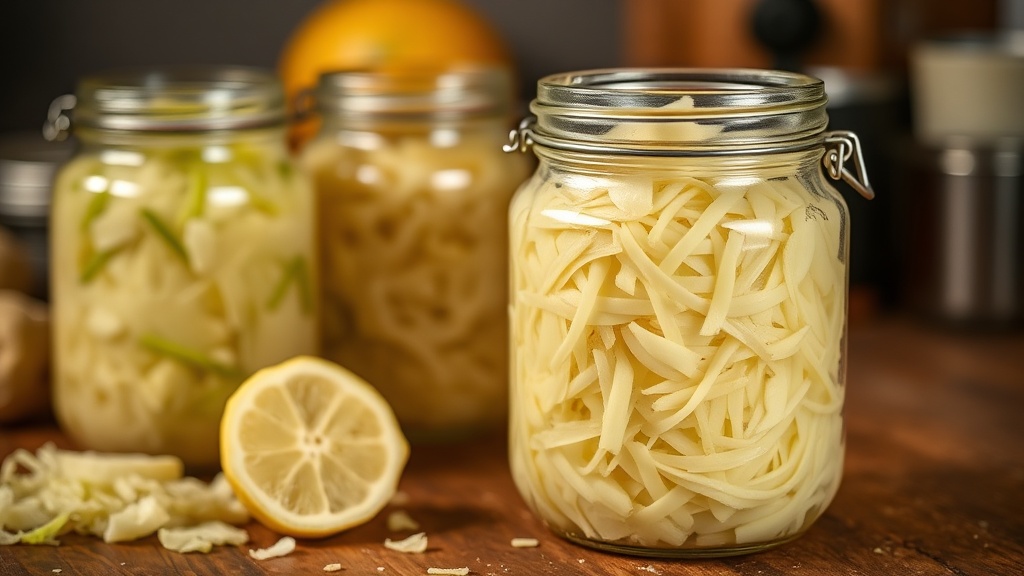
Fermentation Secrets for Your First Batch of Sauerkraut

In this guide, you'll learn how to master the science of lacto-fermentation to create your own crunchy, tangy sauerkraut at home. We'll cover the specific ratios of salt to cabbage, the biological process of how lactic acid bacteria work, and the common mistakes that lead to soft or spoiled batches. You'll also find the exact tools you need to ensure your ferment stays safe and delicious.
What Is the Best Way to Make Sauerkraut?
The best way to make sauerkraut is through a simple process of salt-induced osmosis and anaerobic fermentation. You aren't just "pickling" the cabbage in vinegar; you're creating an environment where salt draws out the natural juices to create a brine. This brine protects the cabbage from oxygen and allows beneficial bacteria—specifically Lactobacillus—to thrive and produce lactic acid.
To start, you need high-quality cabbage. I prefer using a dense, heavy head of green cabbage from a local farmers' market, but a standard head from a grocery store works fine too. You'll also need sea salt or kosher salt. Avoid table salt if possible, because the anti-caking agents can cloud your brine and mess with the chemistry of the ferment.
The Basic Setup:
- Shred the cabbage: Aim for even, thin strips. If the pieces are too large, they won't pack down tightly enough.
- Add the salt: This is the most important step. You need a specific weight of salt to ensure the right acidity.
- Massage the cabbage: This isn't just a suggestion—it's a requirement. You have to massage the salt into the cabbage until a pool of liquid forms at the bottom of the bowl.
- Pack it down: Push the cabbage into your vessel. It must be completely submerged under the liquid.
If any cabbage touches the air, it might develop mold. It's a common mistake (and a frustrating one) to leave the top layer exposed. I always use a glass weight or even a small, clean saucer to keep the shreds pushed down under the brine.
The Importance of Salt Ratios
Most people guess when it comes to salt, but that's a recipe for a mushy mess. A standard ratio is 2% salt by weight of the cabbage. If you don't have a kitchen scale, a good rule of thumb is about 1.5 to 2 teaspoons of sea salt per pound of cabbage. If you use too little salt, the cabbage might soften too quickly or even rot. If you use too much, the flavor will be unpalatable.
I've found that using a high-quality salt like Maldon or a simple coarse sea salt provides the most consistent results. You don't need anything fancy, but consistency matters. The salt does two things: it inhibits "bad" bacteria and it draws out the water. Without that liquid, you don't have a brine, and without a brine, you don't have fermentation.
| Ingredient Type | Recommended Use | Why It Matters |
|---|---|---|
| Green Cabbage | Dense, heavy heads | Provides the sugars for bacteria to eat. |
| Sea Salt | Non-iodized (no additives) | Regulates the microbial environment. |
| Glass Jar | Wide-mouth Mason jar | Allows for easy packing and easy access. |
| Optional addition | Adds traditional flavor and depth. |
How Long Does Sauerkraut Need to Ferment?
Sauerkraut typically takes anywhere from 7 to 21 days to reach its peak flavor, depending on the temperature of your kitchen. A warmer room will speed up the process, but it can also lead to a softer texture if you aren't careful. I prefer to let mine sit for at least two weeks to ensure the flavor is truly deep and acidic.
During the first few days, you'll see bubbles forming. This is a sign of life! It means the bacteria are busy converting sugars into lactic acid. You might see the liquid level rise or even see small bubbles escaping from the jar. This is perfectly normal. If you're using a jar with a lid, you'll need to "burp" it once a day to prevent pressure buildup. This is a vital step to avoid a "kraut explosion" in your kitchen.
The flavor profile will change as the days pass. Initially, it will taste salty and slightly sweet. As the fermentation progresses, it becomes sharper and more acidic. You'll know it's ready when it hits that perfect balance of crunch and tang. If it tastes too mild, let it go longer. If it's getting too soft, you might have had a temperature spike or used too little salt.
One thing to watch for is the color. The cabbage might lose some of its bright green vibrance and become a bit more translucent. This is expected. However, if you see anything that looks fuzzy or colorful (like black or pink mold), discard the whole batch immediately. It's not worth the risk.
Temperature and Environment
The environment is everything. If your kitchen is cold, the fermentation might stall. If it's too hot, the bacteria might work too fast, resulting in a mushy texture. A steady temperature between 65°F and 72°F is the sweet spot. I usually keep my jars in a dark corner of the pantry, away from direct sunlight. Sunlight can degrade the quality of the ferment, so keep it tucked away.
It's also worth noting that the acidity you're creating is a powerful preservative. This is the same principle used in many traditional recipes. If you want to understand more about how acidity impacts food, you might find my post on why a dash of acidity transforms any dish helpful. It's a fundamental concept in cooking that goes far beyond just fermentation.
How Do I Know if My Sauerkraut is Safe?
Safe fermentation is defined by the presence of lactic acid and the absence of harmful pathogens. A safe ferment should smell sour, tangy, and slightly funky—think of a clean, sharp scent. It should never smell like putrefaction, rotten eggs, or anything "off" in a way that makes you recoil. If the smell is truly foul or looks like a science experiment gone wrong, throw it out.
The texture is your second clue. A successful batch of sauerkraut should still have a distinct crunch. If the cabbage is mushy or slimy, the fermentation likely failed because the salt concentration was too low or the cabbage was exposed to too much oxygen. This usually happens when the brine level drops below the surface of the cabbage.
Signs of a Good Batch:
- The brine is cloudy (this is normal and expected).
- The scent is pleasantly acidic and sharp.
- The cabbage is still firm to the bite.
- There is no visible mold on the surface.
If you've ever struggled with the texture of your homemade ferments, you might appreciate looking into why you should always salt your pasta water. While it's a different technique, the logic of using salt to transform the structure and flavor of food is a universal constant in the kitchen.
Once your sauerkraut reaches the flavor profile you love, move it to the refrigerator. The cold temperature will significantly slow down the fermentation process, allowing you to enjoy it for months. A well-made jar of sauerkraut can last a long time in a cold fridge, provided it stays submerged in its brine.
Don't be afraid of the process. Fermentation is a living, breathing part of cooking. It requires patience and a little bit of observation, but the reward of having a jar of tangy, crunchy gold in your fridge is well worth the effort. Start small, watch your ratios, and keep that cabbage under the brine.