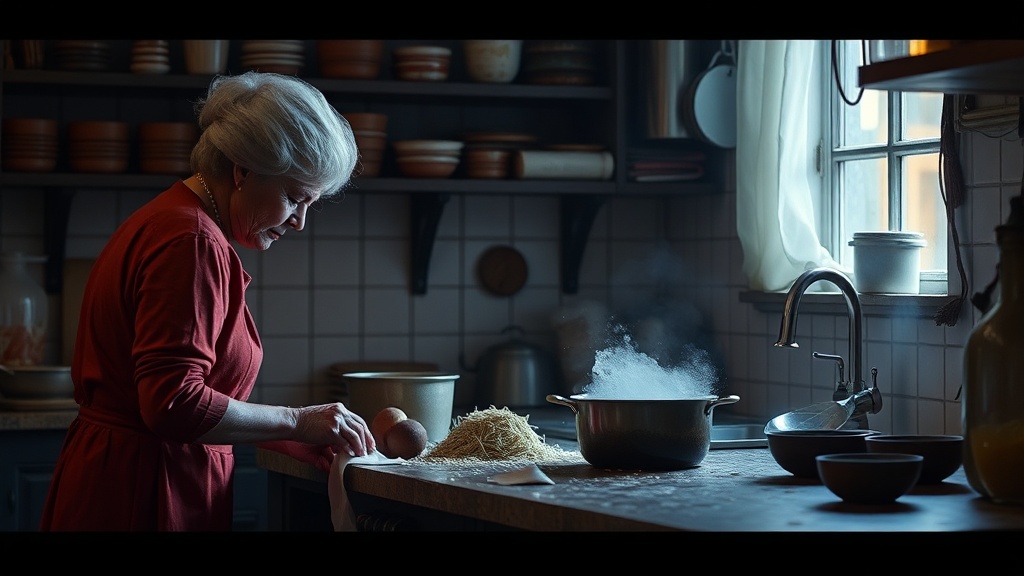
Forgotten Kitchen Skills Your Grandmother Knew by Heart

There's a quiet crisis unfolding in home kitchens across the country. We've traded generations of hard-won food wisdom for convenience—swapping wooden spoons for silicone gadgets, fermentation crocks for refrigerator pickles, and patient observation for timer apps. This listicle resurrects nine techniques that once defined domestic cooking, exploring not just how to execute them, but why they mattered to the communities who kept them alive. You'll learn practical skills your ancestors practiced daily, understand the cultural forces that shaped them, and discover how these methods can transform your cooking today.
What Is Nixtamalization and Why Did Mesoamerican Cooks Invent It?
Long before commercial masa lined grocery shelves, Indigenous cooks throughout Mexico and Central America practiced nixtamalization—a process of cooking dried corn in alkaline water (usually calcium hydroxide, or "cal"). The technique isn't merely tradition; it's nutritional survival. Untreated corn lacks bioavailable niacin, and populations dependent on it without this processing developed pellagra. The Maya, Aztec, and countless predecessor cultures figured this out millennia ago.
The word itself comes from Nahuatl: nextli (ashes) and tamalli (corn dough). When you soak corn in limewater, the pericarp loosens for easier grinding, the flavor deepens into something nutty and complex, and the nutritional profile transforms entirely. Your modern tortillas—the ones with that distinctive aroma? They owe everything to this ancient chemistry.
Home cooks can replicate small-batch nixtamalization without specialized equipment. Start with dried field corn (not sweet corn), food-grade calcium hydroxide (available at Latin markets or online), and patience. The corn simmers briefly, then soaks overnight. The next morning, you rub off the loosened hulls and grind the softened kernels into masa. The resulting tortillas bear no resemblance to their mass-produced counterparts—thicker, more flavorful, with that haunting mineral edge that speaks of volcanic highlands and stone metates.
The technique migrated with Mexican communities into the American Southwest, where it sustained miners, railroad workers, and agricultural laborers through grueling conditions. Every tortilla made this way carries that history—the adaptation of Indigenous knowledge to survive displacement and hard labor.
How Did Dried Beans Become the Backbone of Working-Class Cooking?
Before refrigeration democratized protein storage, dried legumes represented edible insurance. A sack of beans in the pantry meant dinner regardless of weather, income fluctuations, or transportation disruptions. But the real magic wasn't hoarding—it was transformation through slow, intentional cooking.
Traditional bean cooking rejects the quick-soak method your pressure cooker manual recommends. Instead, cooks practiced extended soaking (often 12-24 hours), gentle simmering, and flavor-building through aromatic vegetables, pork fat, or wood smoke. New Orleans red beans, Cuban black beans, Boston baked beans—each regional variation emerged from specific economic constraints and available ingredients.
The "holy trinity" of Cajun cooking (onion, celery, bell pepper) developed partly because these vegetables could be grown in small urban plots and stored in root cellars. When simmered with Monday's leftover ham bone and red kidney beans, they produced something greater than survival food—a tradition that continues in Creole kitchens today. The practice of cooking beans on Mondays specifically emerged from laundry day; the pot could simmer unattended while women scrubbed clothes by hand.
Migrating communities carried their bean traditions like edible passports. Mexican frijoles de olla, cooked in clay pots over low heat, developed differently in Texas than in Oaxaca. Italian immigrants adapted their pasta e fagioli to American ingredients. Each variation tells a story of adaptation, loss, and persistence.
Can You Still Build Flavor Without Commercial Stock?
Walk into any professional kitchen today and you'll find boxes of concentrated stock base, crystals of MSG-laden powder, or cartons of pre-made liquid. Your great-grandmother had none of these—and her soups tasted better for it. The technique of building stock from scraps, bones, and vegetable trimmings represents both economy and flavor architecture.
Traditional stock-making isn't following a recipe; it's understanding extraction. Roasted bones contribute collagen and depth. Vegetable trimmings (onion skins, celery leaves, parsley stems) add complexity that would otherwise be composted. The gentle simmer—not rolling boil—releases flavors without clouding the liquid. This was daily practice in households where nothing went to waste.
French cooking codified this into fond (the browned bits in a pan), glace (reduced stock), and remouillage (a second extraction from the same bones). Chinese cooking developed similar techniques—superior stock simmers for hours with ham, chicken, and aromatics. Each tradition recognized that liquid flavor required time and attention that modern shortcuts can't replicate.
The technique matters beyond taste. Making stock from scraps connects you to generations who couldn't afford waste, who understood that flavor compounds lurked in what we'd discard. That onion skin contributes quercetin and color. Those chicken bones release minerals and gelatin that commercial stocks often lack. The difference between stock and broth isn't semantic—it reflects different extraction goals and culinary purposes.
Why Did Every Culture Develop Some Version of Hand-Chopped Meat?
Before meat grinders existed—before even sharp knives were household common—cooks chopped protein by hand. The technique persists in Lebanese kibbeh, Thai larb, Italian ragù traditions, and countless other preparations. Hand-chopping isn't nostalgia; it produces fundamentally different texture than machine grinding.
When you chop meat with a knife, you control the cut direction and preserve some connective tissue structure. The resulting texture has variation—some finer bits, some coarser, irregular surfaces that catch sauce differently. Machine grinding, by contrast, shears everything uniformly, often warming the fat enough to smear it through the protein. The difference matters in meatballs, dumpling fillings, and tartare preparations.
The technique also carries cultural memory. Syrian grandmothers judged prospective daughters-in-law partly by their knife skills with kibbeh nayyeh (raw lamb with bulgur). The meat must be chopped to specific fineness, the bulgur hydrated precisely, the seasoning balanced through taste rather than measurement. These weren't arbitrary standards—they ensured food safety in raw preparations and demonstrated the cook's attention and care.
Migrating populations maintained hand-chopping when they couldn't transport heavy equipment. Italian immigrants to Argentina kept their knife skills for matambre preparations. Chinese railroad workers in California chopped pork for dumplings in camp kitchens. The technique required only a sharp blade and endurance—resources available to nearly everyone.
How Did Home Cooks Preserve Summer Before Canning Jars Existed?
Fermentation, drying, and confit represented survival technologies before industrial preservation. These weren't gourmet techniques—they were necessity driven by abundance and scarcity cycles. A successful tomato harvest meant weeks of processing. A pig slaughter in autumn meant months of preserving meat without refrigeration.
Confit—cooking and storing meat submerged in its own fat—emerged from this reality. French country cooks would salt duck or goose legs, cook them slowly in rendered fat, then seal them in crocks covered with that same fat. Stored in cool cellars, the meat lasted months. When wanted, a leg was pulled from the fat, crisped in a hot pan, and served. The technique migrated to New Orleans with Acadian settlers, becoming part of Creole culinary vocabulary.
Drying fruit and vegetables followed similar logic. Italian pomodori secchi, Middle Eastern dried mint and za'atar, Chinese preserved radish—each represents techniques for concentrating flavor and preventing spoilage. These weren't just preservation; they were transformation. A sun-dried tomato bears little resemblance to its fresh counterpart. The drying concentrates sugars, develops umami through protein breakdown, and creates entirely new ingredients.
Modern home cooks can reclaim these techniques without specialized equipment. A simple oven set to its lowest temperature dehydrates tomatoes overnight. Basic salt and time transform cabbage into sauerkraut. Submerging cooked garlic in olive oil produces confit that keeps for weeks refrigerated. The National Center for Home Food Preservation provides science-based guidance for safe drying practices.
What Made Cast Iron the Original Non-Stick Pan?
Before Teflon coated every skillet in America, cast iron represented the non-stick solution—and it required understanding rather than factory engineering. The seasoning layer on a well-used cast iron pan is polymerized oil, built up through repeated heating and fat application. This isn't mere maintenance; it's a relationship between cook and tool that develops over years.
The technique arrived with European colonists (though similar cast metal cooking existed across Asia for millennia). American manufacturing made it ubiquitous—nearly every household owned cast iron skillets, Dutch ovens, and griddles through the late 19th and early 20th centuries. These pans migrated west with settlers, cooked over campfires during the Civil War, and fed generations through the Depression.
Maintaining cast iron requires rejecting everything modern non-stick cookware taught you. You don't wash with soap (or do so rarely and carefully). You don't soak. You heat slowly, add fat before the pan gets hot, and clean while still warm. The reward is a cooking surface that improves with age, that can sear steak perfectly, bake cornbread with the ideal crust, or fry eggs with minimal fat.
The technique nearly died as lighter, cheaper aluminum and non-stick pans dominated post-war kitchens. But cast iron persisted in Southern cooking, in camping culture, and among cooks who valued durability over convenience. Today's resurgence reflects recognition that some old technologies outperform their replacements.
Why Did Bakers Once Time Their Dough by Observation Rather Than Clock?
Commercial yeast packets with standardized activity levels didn't exist until the 20th century. Before that, bakers worked with wild yeasts, sourdough cultures, and environmental conditions that varied daily. They learned to read dough—its smell, its feel, the way it responded to touch—rather than following timed recipes.
This observational skill developed because fermentation is biological, not mechanical. Yeast activity depends on temperature, humidity, flour condition, and countless variables. A dough that needs three hours in winter might need ninety minutes in summer. The baker's hand pressing into the dough, watching how quickly it springs back, provided more accurate information than any clock.
The technique connected bakers to their environment in ways we've lost. French boulangers knew how morning humidity affected their baguettes. San Francisco sourdough bakers understood how the Bay Area's specific yeasts produced their bread's characteristic tang. This wasn't mysticism—it was accumulated observation refined through generations.
Home bakers can reclaim this through simple attention. Notice how your dough smells—yeasty, slightly alcoholic, perhaps with fruity notes. Feel its tension when shaped; it should resist slightly, holding structure without tearing. Watch how it proofs; the dough should feel light, airy, like a soft pillow rather than dense clay. King Arthur Baking's guide to reading dough readiness offers visual cues that replace timer dependence.
How Did Immigrants Replicate Home Flavors Without Familiar Ingredients?
The history of American food is largely the history of substitution. Italian immigrants couldn't find proper 00 flour or San Marzano tomatoes, so they adapted to American bread flour and Jersey tomatoes. Chinese cooks developed chop suey and fortune cookies not from tradition, but from available ingredients and American expectations. These weren't failures of authenticity—they were creative survival.
The technique requires understanding a dish's essential character rather than its specific components. What makes Italian tomato sauce taste Italian? Not necessarily San Marzano tomatoes, but the balance of acid, sweetness, and depth achieved through long cooking. Chinese stir-fry doesn't require a wok (though it helps)—it requires high heat, quick cooking, and proper ingredient preparation.
Mexican cooks in Texas developed what's now called Tex-Mex when they couldn't source traditional ingredients. German immigrants to Texas created Czech-influenced kolaches using local fruit. Each adaptation represents culinary problem-solving that maintained cultural connection despite material constraints.
Modern cooks can apply this same flexibility. Can't find Thai bird chilies? Understand that they contribute heat and fruity flavor, then substitute serranos or adjust quantities accordingly. No mirin for your Japanese recipe? Mix sake with sugar to approximate the sweet, alcoholic complexity. The technique isn't about perfect replication—it's about honoring the dish's intent with available means.
What Cooking Skills Are We in Danger of Losing Forever?
Each generation inherits less food knowledge than the one before. Not because we're less capable, but because the infrastructure that supported traditional cooking—extended families in proximity, agricultural rhythms, unprocessed ingredients—has fragmented. When the last grandmother who made filo by hand dies, that technique doesn't just lose a practitioner; it loses a transmission link.
But skills can be recovered through deliberate practice. The techniques in this listicle aren't theoretically difficult—they require patience, attention, and repetition. You can learn nixtamalization from a YouTube video. You can practice dough observation with weekly bread baking. The barrier isn't technical complexity; it's willingness to slow down.
There's something profound at stake beyond tasty food. These techniques encode cultural memory—the movement of peoples, the constraints of poverty, the abundance of harvests, the ingenuity of cooks working with limited means. When we lose the technique, we lose access to that history. We lose the understanding that our ancestors weren't eating "ethnic food" or "peasant food"—they were eating solutions to real problems, developed through centuries of trial and error.
Your kitchen can become a place of preservation, not just consumption. Every batch of properly soaked beans, every hand-chopped meatball, every cast iron skillet maintained with care keeps these techniques alive. The food tastes better, certainly—but it also tastes like continuity, like refusing to let hard-won wisdom disappear into the convenience of the moment.