Making Your Own Chili Oil with Traditional Sichuan Aromatics

Imagine a small, steam-filled kitchen in Chengdu. A cook drops a handful of dried peppercorns into a heavy wok, and the air immediately thickens with a scent that is both numbing and deeply fragrant. This isn't just about heat; it's about the precise layering of aromatics that turn a simple pantry staple into a complex, textured condiment. Making your own chili oil at home allows you to control the heat, the texture, and—most importantly—the depth of flavor that store-bought versions often lack. We aren't just making a spicy oil; we are building a foundation for hundreds of future meals.
What makes a good chili oil base?
The foundation of any great chili oil lies in the quality of the dried chilies and the oil used. You aren't looking for just any spice; you want chilies that offer a balance of color and heat. In many professional kitchens, a blend of different varieties is used to achieve a specific profile. For example, a high-heat chili provides the punch, while a milder, fruitier chili contributes to the deep crimson hue. The oil itself acts as a carrier for these flavors. While many people reach for a neutral vegetable oil, using an oil with a high smoke point is a practical necessity to ensure the aromatics don't burn during the infusion process.
The most distinctive element of Sichuan-style oil is the presence of Szechuan peppercorns. These aren't actually peppercorns but are members of the citrus family. They provide the signature mala sensation—a combination of spicy heat and a tingling, numbing sensation on the tongue. Without these, you're just making a standard chili oil; with them, you're making a piece of culinary history. You can learn more about the botanical origins of these spices through the Britannica plant database to better understand the science of the numbing effect.
How do you infuse spices without burning them?
Temperature control is the difference between a bright, fragrant oil and a bitter, burnt mess. Most people make the mistake of dumping everything into a boiling pot. Instead, you want to use a graduated approach. Start with your aromatics—star anise, cinnamon sticks, bay leaves, and peppercorns—in oil that is warm but not yet smoking. This slow extraction allows the flavors to seep into the fat without the risk of scorching the delicate spices.
- Prepare the Chili Flakes: Place your dried chili flakes in a heat-proof bowl. Ensure they are coarse; too fine a grind will result in a gritty, muddy oil.
- Infuse the Aromatics: In a small saucepan, combine your oil with star anise, cinnamon, and cardamom. Heat until the spices become fragrant.
- The Temperature Test: To avoid burning the chili flakes, you must check the oil temperature. A common trick is to drop a single chili flake into the oil; if it sizzles immediately but doesn't turn black, the oil is ready.
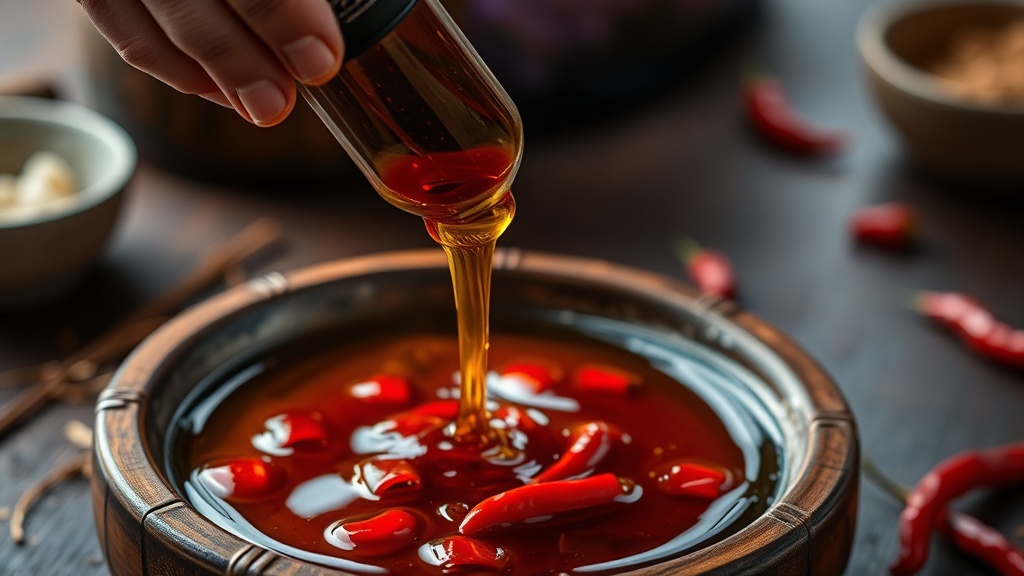
- The Pour: Slowly pour the hot, infused oil over the chili flakes in your bowl. This creates an immediate infusion of color and heat.
If you find yourself wondering about the specific heat levels of various peppers, the Scoville Scale resources can provide a way to map out your personal spice preferences before you begin. This helps you decide if you want a mild, flavorful oil or one that demands respect.
Can I use different types of oil?
While many traditional recipes call for soybean or peanut oil, the choice is largely up to your palate and budget. Peanut oil is a favorite in many Asian kitchens because of its rich, nutty undertone and high smoke point. However, if you have a nut allergy, don't worry. A high-quality canola oil or even a light grapeseed oil works perfectly well. The goal is to provide a neutral canvas that lets the spices shine. Avoid using extra virgin olive oil for this process; its low smoke point and strong flavor profile will clash with the delicate Sichuan aromatics.
| Ingredient | Role | Tip |
|---|---|---|
| Dried Chili Flakes | Heat and Color | Use a coarse grind for texture. |
| Sichuan Peppercorns | Numbing Sensation | Toast them lightly before grinding. |
| Star Anise | Aromatic Base | Provides a subtle licorice note. |
| Neutral Oil | Carrier | Ensure a high smoke point. |
As you develop your technique, you might notice that the oil becomes more vibrant with each use. This is because the flavors are being continuously deepened. If you find the oil is becoming too thick or the spices are settling too heavily at the bottom, you can slightly increase the ratio of oil to solids in your next batch. It is a living condiment that evolves based on how you treat it.
Once your oil has cooled, store it in a glass jar in a cool, dark place. It will stay fresh for several weeks, but the flavor profile will continue to shift as the spices continue to work. Use it over steamed vegetables, noodles, or even as a dipping oil for dumplings. The beauty of this process is that it isn't just about the finished product—it's about the ritual of building a flavor profile that is entirely your own.