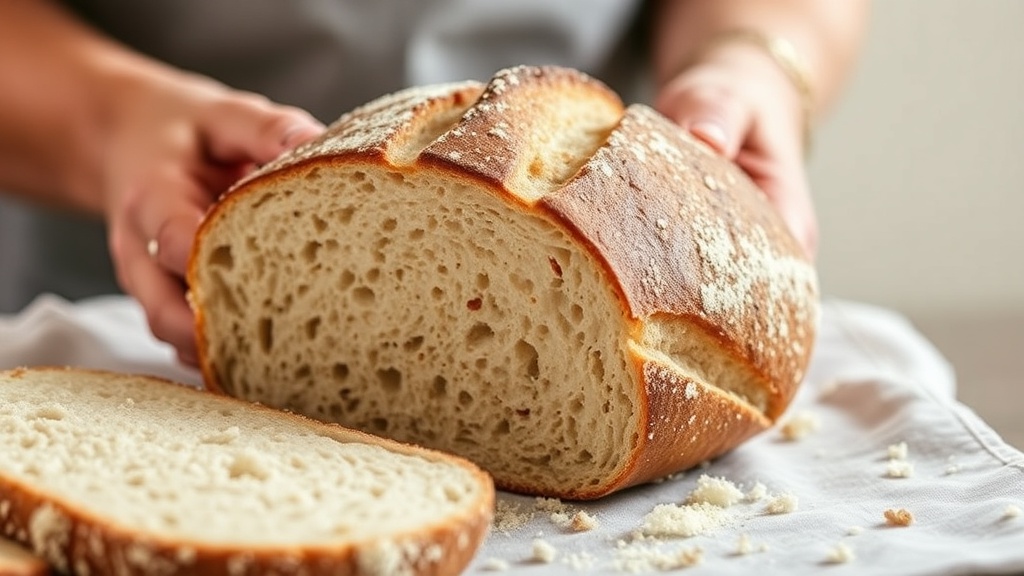
The Art of Sourdough: A Beginner's Journey to Perfect Homemade Bread

This post provides a complete roadmap for creating sourdough bread from scratch, covering the science of wild fermentation, the exact measurements and timelines required for consistent results, and the historical context that makes this ancient technique relevant in modern kitchens. Understanding sourdough fundamentals transforms baking from guesswork into a reliable craft, producing loaves with superior flavor, texture, and nutritional value compared to commercial yeasted bread.
The Ancient Roots of Wild Fermentation
Sourdough represents humanity's original leavened bread, predating commercial yeast by at least 5,000 years. Archaeological evidence from Switzerland suggests humans were cultivating wild yeasts for bread as early as 3700 BCE, though the practice likely extends much further into prehistory. During the California Gold Rush of 1849, miners carried sourdough starters in their packs, valuing the living culture more than gold dust. The famous Boudin Bakery in San Francisco, established in 1849, still maintains a mother starter descended from that era—a living link to baking history that has survived earthquakes, fires, and two centuries of cultural change.
The distinctive tang of San Francisco sourdough emerged from Fructilactobacillus sanfranciscensis, a bacterium native to the Bay Area that thrives in the symbiotic relationship between wild yeast and lactic acid bacteria. This microbial partnership occurs everywhere, meaning each kitchen develops its own microbial fingerprint. A starter cultivated in Brooklyn tastes different from one nurtured in Portland or Paris, making every loaf a unique expression of place.
Understanding the Living Starter
A sourdough starter is a culture of wild yeast and lactic acid bacteria maintained through regular feeding of flour and water. The yeast produces carbon dioxide, creating the rise, while bacteria generate lactic and acetic acids, developing flavor. Commercial yeast (Saccharomyces cerevisiae) provides one-note fermentation; wild starters offer complexity that cannot be replicated with packets from the grocery store.
Creating a starter from scratch requires patience and precise ratios. Begin with 100 grams of whole wheat flour and 100 grams of water at 78°F (25°C). Whole wheat contains more wild yeast spores than white flour, accelerating establishment. Mix until combined, cover loosely, and let rest at room temperature (70-75°F) for 24 hours.
On day two, discard all but 50 grams of the mixture and feed with 50 grams all-purpose flour and 50 grams water. Repeat this discard-and-feed cycle daily. By days 5-7, the starter should double within 4-6 hours of feeding, displaying bubbles throughout and emitting a pleasant, tangy aroma reminiscent of yogurt. If the culture smells like nail polish remover, it needs more frequent feedings—this indicates excess acetic acid production.
Once established, maintain the starter at a 1:2:2 ratio: 50 grams starter, 100 grams flour, 100 grams water. For weekly baking, refrigerate after feeding; the cold slows fermentation dramatically. Remove from refrigeration 12 hours before baking, feed, and wait for the culture to become active and foamy.
Essential Equipment and Ingredients
Successful sourdough requires minimal specialized equipment, but each tool serves a specific purpose:
- Kitchen scale: Precision matters. Volume measurements vary by 20-30% depending on humidity and measuring technique. A digital scale costing $15 provides accuracy that transforms results.
- Banneton or proofing basket: The rattan coils create the characteristic spiral pattern on finished loaves while wicking surface moisture for better crust formation. A 9-inch round banneton accommodates a 1,000-gram dough.
- Dutch oven: The enamel-coated cast iron pot from Le Creuset or the more affordable Lodge version traps steam during the initial 20 minutes of baking. This steam keeps the crust soft, allowing maximum expansion before the crust sets.
- Bench scraper: Essential for dividing and shaping dough without tearing the gluten structure.
- Lame or razor blade: Creates the decorative scores that control expansion and prevent random bursting.
Ingredient selection directly impacts flavor. King Arthur all-purpose flour (11.7% protein) provides consistent results for beginners. As skills develop, experiment with Central Milling organic bread flour or regional wheat varietals like Red Fife or Turkey Red. Use filtered water—chlorine and chloramine inhibit microbial activity. Salt should be pure, without anti-caking agents; Diamond Crystal kosher salt dissolves readily and measures consistently.
The Baking Process: Step by Step
This formula produces one 1,000-gram loaf with 75% hydration—a manageable starting point that yields open crumb and crisp crust.
Ingredients:
- 150 grams active starter (fed within 4-6 hours, doubled in volume)
- 350 grams water at 78°F (25°C)
- 500 grams bread flour
- 10 grams salt
Autolyse (1 hour): Combine flour and 325 grams water. Mix until no dry flour remains, then rest. This hydration period allows flour proteins to align, developing gluten without mechanical mixing. The dough transforms from shaggy to smooth.
Mixing: Add starter to the autolyse, squeezing through fingers until incorporated. Add salt and remaining 25 grams water, mixing until the dough passes the "windowpane test"—stretching a small piece thin enough to see light through without tearing.
Bulk Fermentation (4-6 hours at 75°F): Perform stretch-and-folds every 30 minutes for the first 2 hours. Wet hands, grab the dough from the bottom center, stretch upward, and fold over itself. Rotate the bowl 90 degrees and repeat. Four sets build strength. The dough is ready when it has increased in volume by 50-70%, shows bubbles on the surface, and jiggles when the bowl is shaken.
Pre-shaping: Gently turn dough onto a lightly floured surface. Fold edges toward the center, flip seam-side down, and rotate against the counter to create surface tension. Rest 30 minutes under a damp towel.
Final Shaping: Dust the banneton with rice flour (prevents sticking better than wheat flour). Shape the dough into a tight round or oval, depending on banneton shape. Place seam-side up in the banneton.
Cold Proof: Refrigerate 12-24 hours. This slow fermentation develops complex flavors and makes scoring easier.
Baking: Preheat Dutch oven at 500°F (260°C) for 45 minutes. Invert dough onto parchment, score with a lame at a 45-degree angle to create an "ear," and carefully lower into the hot pot. Cover and bake 20 minutes. Remove lid, reduce to 450°F (232°C), and bake 20-25 minutes more until the crust is deep mahogany and the internal temperature reaches 208-210°F (97-98°C).
Cool completely on a wire rack—at least 2 hours. Cutting too early ruins the texture and releases moisture that continues setting the crumb.
Troubleshooting Common Issues
Dense crumb with few holes: Usually indicates under-fermentation. The dough needs more time during bulk fermentation or a warmer environment. A dough proofing box set to 78°F eliminates temperature variables.
Flat loaf without oven spring: Over-proofing is the culprit. The dough exhausted its fermentation strength before baking. Reduce proofing time or temperature.
Gummy interior: The bread needs longer baking or proper cooling. Internal temperature must reach 208°F. Even properly baked loaves gummify if sliced within the first hour.
Excessive sourness: Feed the starter more frequently or keep it at cooler temperatures (65-68°F). Warmer starters produce more acetic acid.
The Cultural Resurgence
Sourdough has experienced remarkable revival. During 2020, King Arthur Flour reported a 600% increase in flour sales, with sourdough starter tutorials generating millions of views. But this trend transcends temporary fascination. The resurgence connects to deeper desires: understanding food origins, rejecting industrial processing, and participating in a craft that spans millennia.
Community Sourdough Library in St. Vith, Belgium, archives over 140 starters from 27 countries, preserving biological diversity that industrial agriculture threatens. Each sample carries genetic material and cultural memory—from a 120-year-old Alaskan starter maintained by prospectors' descendants to cultures from Sudan and Greece.
Commercial bakeries like Tartine in San Francisco and Ken's Artisan Bakery in Portland have elevated sourdough to art, but the technique remains democratic. The same biological processes occur in a $5 million production facility and a home kitchen. The variables are time, temperature, and attention—resources available to anyone willing to invest them.
"Bread is the warmest, kindest of all words. Write it always in capital letters: Bread." — Robert Pirsig
Sourdough rewards patience with flavor impossible to manufacture. Each loaf represents a conversation between the baker and invisible microorganisms, a collaboration that has sustained human civilization since the Bronze Age. The first successful loaf marks not an endpoint but the beginning of a relationship—with the starter, with the process, and with a tradition that connects modern kitchens to the earliest agricultural communities.