The Nowruz Table Has Been Set for 3,000 Years and It Still Has Something to Teach You
Every dish on a Nowruz table is an argument about time. That's what hit me the first year I sat cross-legged in front of a haft-sin spread in a living room in Westwood, Los Angeles — not Tehran, not Shiraz, but a second-floor apartment on Westwood Boulevard where the Persian diaspora has been quietly building one of the most food-obsessed New Year celebrations on earth.
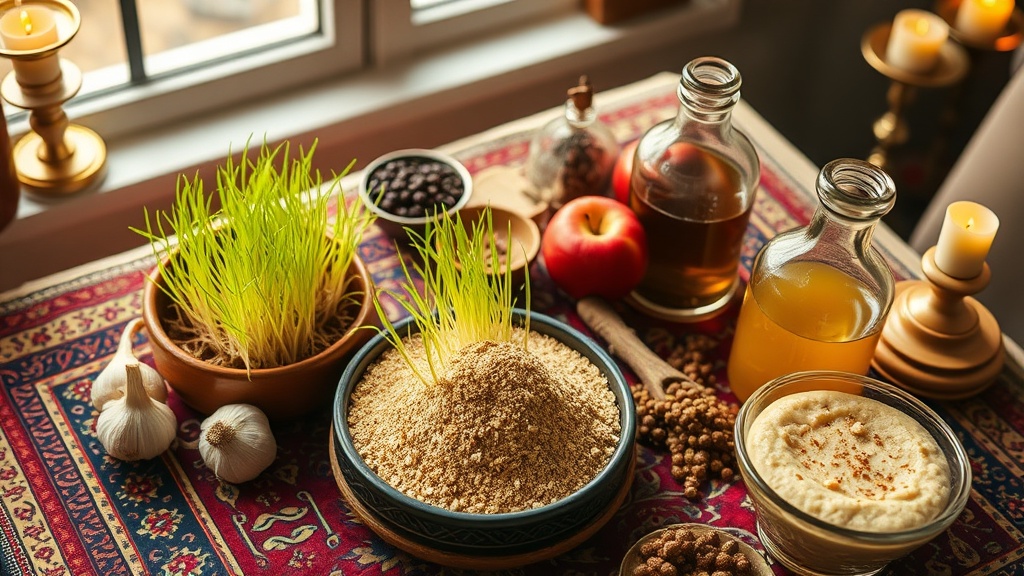
Nowruz lands on March 20 this year, the exact moment the sun crosses the celestial equator. It's not a religious holiday. It predates Islam, predates Christianity, predates most things we think of as "old." Zoroastrian roots, possibly 3,000 years deep. And when you strip away the fireworks and the goldfish bowls and the new clothes, what remains is a table. Seven items. All starting with the letter "sin" (the Persian "s"). All meaning something specific about what it takes to start over.
The Haft-Sin Is Not Decoration
Western food media loves to photograph the haft-sin like a centerpiece. It's not. It's a philosophical text laid out in produce and spices.
Sabzeh — sprouted wheat or lentils, grown in the weeks before Nowruz. Rebirth. You watch it grow. You participate in the renewal before the new year even arrives.
Samanu — a wheat germ pudding that takes hours of stirring. Patience and the sweetness that comes from labor. No sugar added. The sweetness develops through slow enzymatic conversion of starch. If that's not a metaphor for how good things actually happen, I don't know what is.
Senjed — dried oleaster berries. Love. Specifically, the kind of love that sustains rather than intoxicates.
Sir — garlic. Medicine and protection. The Persians understood the antimicrobial properties of allium centuries before anyone published a study.
Sib — apples. Beauty and health. Not a red delicious showpiece — any apple will do, because the point is sustenance, not aesthetics.
Somāq — sumac. The color of sunrise, representing the patience required to wait for light after darkness.
Serkeh — vinegar. Age and patience. The time it takes for something to transform into something better.
Seven items. Zero filler. Every single one earned its place through centuries of collective agreement about what matters when you're trying to begin again.
Sabzi Polo ba Mahi: The Meal That Starts the Year
If the haft-sin is the philosophy, sabzi polo ba mahi is the practice. Herbed rice with fish — specifically, a white fish, pan-fried until the skin crackles, served over rice that's been stained green with dill, cilantro, chives, fenugreek, and parsley.
The herbs matter. Not as garnish, not as afterthought. They're folded into the parboiled rice before the tahdig forms — that golden crust at the bottom of the pot that every Persian cook judges themselves by. The herbs represent the green of spring, obviously, but also the idea that flavor should be structural, not decorative.
The fish is almost always a firm white variety. In Iran, that might be sabzi mahi from the Caspian. In LA, it's often branzino or sea bass. The point is clean flavor — something that lets the herb-loaded rice do the talking.
I've watched cooks spend forty-five minutes just on the tahdig. Not because they're fussy, but because the crust is a contract with whoever's sitting down to eat: I cared enough to get this right. It's the same impulse that drives someone to sprout wheat three weeks early for the sabzeh. These aren't shortcut cultures. These are cultures that treat patience as a core ingredient.
Ash Reshteh: Noodle Soup as Fortune Telling
Then there's ash reshteh — a thick, almost stew-like soup loaded with herbs, legumes (lentils, chickpeas, kidney beans), and reshteh noodles. The noodles are the key. Reshteh means "thread" in Persian, and the threads represent the paths your life might take in the coming year. You're literally eating your own future.
The soup gets finished with kashk — fermented whey — and fried mint oil. It's sour, savory, deeply herbal, and so thick a spoon can almost stand in it. Every family has their ratio. Every family will tell you everyone else's ratio is wrong.
This isn't party food in the Western sense. It's slow food in the most literal way — a dish that asks you to sit, to eat with purpose, to think about what the next year holds while you untangle noodles from beans.
Kuku Sabzi: The Frittata That Tells You Spring Arrived
Kuku sabzi might be the most underrated dish in the Nowruz canon. It's an herb frittata — eggs folded with an almost absurd volume of fresh herbs (parsley, cilantro, dill, chives, fenugreek) plus walnuts and barberries. The ratio of herb to egg should make you nervous. If it doesn't, you've added too many eggs.
It gets baked or pan-fried until the outside is deeply bronzed and the interior is still verdant. Slice it into wedges. Eat it at room temperature. It's the kind of food that travels, that sits on a table for hours without losing its dignity — which is exactly what Nowruz demands, since the celebration isn't a single meal but a thirteen-day stretch of visiting, hosting, and eating.
The Diaspora Table
Here's what I find most striking about Nowruz food in the diaspora: it doesn't simplify. In a lot of immigrant food traditions, the celebration meals get trimmed down over generations. Fewer dishes. Store-bought substitutes. Reasonable compromises with American grocery stores and American schedules.
Not Nowruz. Walk into a Persian household in LA, in Northern Virginia, in Toronto, in London on March 20 and you'll find the haft-sin assembled with the same precision as if the family were still in Isfahan. The sabzeh was sprouted from scratch. The samanu was stirred for hours. The ash reshteh has four types of legumes.
This persistence isn't nostalgia. It's insistence. The food is the memory. Shortcut the food and you shortcut the connection to a 3,000-year-old idea about what it means to start fresh.
Why This Matters Beyond the Persian Table
Nowruz is celebrated across Iran, Afghanistan, Tajikistan, Azerbaijan, parts of Iraq, Turkey, and Central Asia. Over 300 million people mark it in some form. The food shifts — Afghans prepare haft mewa (seven fruits in syrup) instead of haft-sin; Uzbeks and Tajiks make sumalak communally in giant cauldrons — but the core idea remains: you eat your values at the start of the year.
I think about this every time I hear someone describe food as "just fuel." No cuisine on earth treats food as just fuel. But Nowruz makes the argument more explicitly than most: every item on that table means something. Every dish served in the first days of the new year is a statement about what you hope for.
Spring starts March 20. If you're near a Persian market — and if you're in any major American city, you are — pick up some sabzi for the rice. Find sumac and dried barberries. Make the kuku sabzi, even if you've never heard of it before today. The herbs will tell you spring arrived before the calendar does.
And if someone invites you to their Nowruz table, say yes. Sit on the floor if that's where they're sitting. Eat the ash reshteh slowly. Ask about the haft-sin. Listen to the answer. That table has been set, in some form, for thirty centuries. It has something to teach you about beginning again.