Who Gets to Define 'Classical'? How Female Chefs Rewrote Culinary Authority

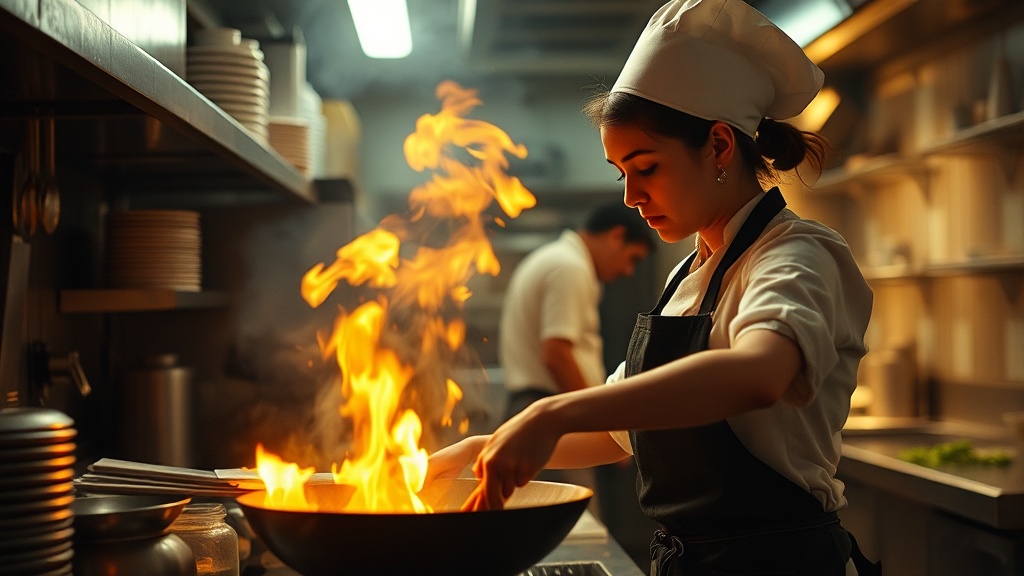
I spent two years in a commercial kitchen before I was allowed anywhere near the sauté station. Prep first. Always prep. You learn the brigade's logic through your hands before you understand it with your head: the chef de cuisine tasting every sauce, the sous chef running service with a voice like controlled fury, the hierarchy moving information downward and finished plates upward, fast, loud, total. I loved it. But I also noticed something that took me a while to name. The brigade system didn't just organize who stood where. It organized what counted.
The word "classical" in culinary culture is not a neutral descriptor. It's a power claim.
When we call French cuisine classical, we're declaring that one tradition, born in a specific place, built by a specific demographic, enforced by a specific institutional system, gets to be the grammar against which everything else is measured. Classical. As opposed to what? Ethnic? Regional? Peasant?
That framing didn't happen by accident. It was engineered.
Auguste Escoffier spent the late 19th and early 20th centuries doing something more consequential than codifying French technique. He built an institutional architecture: the kitchen brigade, the apprenticeship pipeline, the professional hierarchy. It determined who counted as a legitimate culinary professional. The system was military in structure because it was military in purpose — ranks, discipline, chains of command, and a very clear set of people who were not invited to be officers. Women, broadly. Non-European cooks, definitionally. Anyone whose food didn't originate in the tradition Escoffier was canonizing.
The stakes weren't just professional. The Escoffier system wasn't merely determining who ran a kitchen brigade. It was determining what counted as sophisticated food, full stop. French technique became the grammar of culinary legitimacy. Everything else was derivative, folk, home cooking — valuable, perhaps, but not *serious*. The distinction between haute cuisine and everything else mapped, in practice, onto distinctions between European and non-European, between professional and domestic, between men and women.
Historians of the culinary profession — Priscilla Parkhurst Ferguson in *Accounting for Taste* (2004) and contributors to Paul Freedman's *Food: The History of Taste* (2007), among others — have documented how systematically this exclusion was reproduced through credentialing, guild membership, and the very definition of "professional" cooking. The pattern, most food historians argue, wasn't incidental. It was structural.
---
The women who dismantled that structure mostly didn't try to argue their way in through the front door.
Julia Child is the obvious starting point, and she's usually misread. The popular narrative frames her as having democratized French cooking, brought it into American homes, made it accessible. That's true but it undersells what she actually did. Think about what mastering a French technique requires in physical terms: the feel of a properly reduced beurre blanc tightening on a spoon, the sound a good fond makes as it releases from a copper pan, the moment a sauce goes from greasy to emulsified and you learn it in your hands before you can explain it with words. Child said that once you understand why those techniques work, the tradition doesn't own you. You can apply that knowledge to whatever you want to cook. That's not democratization. That's a theft of authority from the people who were hoarding it.
Alice Waters made a more radical move. When she opened Chez Panisse in Berkeley in 1971, she didn't try to compete with French restaurants on their own terms. She built a fine dining destination around Northern California produce, around farmers she knew by name, around the idea that a tomato harvested that morning from thirty miles away was worth more than any imported French ingredient.
Consider what that decision looked like at the prep station. In a French brigade, the sourcing hierarchy was fixed: classical pantry, classical larder, established suppliers shipping ingredients the menu required. Waters flipped the whole logic. The vegetable garden drove the menu. Her cooks had to actually *know* the ingredient, not just execute a technique on it. A dry-farmed tomato at peak August doesn't need much. You can taste that in a single bite, and working with one teaches you something the recipe can't. A mealy, out-of-season imported tomato needs work to taste like anything at all. Her kitchen ran on that physical knowledge, the kind you build through seasons of handling the same thing as it changes.
By centering that knowledge, she forced a question the culinary establishment had never had to seriously answer: why, exactly, is French more sophisticated than Californian? If the argument is terroir — the idea that the best food comes from ingredients grown in the right place by people who understand that land — then California has terroir too. America has terroir. The universal claim of French culinary supremacy, looked at from this angle, starts to look like what critics of it have long argued it was: a provincial claim granted universal status through institutional power, not through any defensible logic.
Waters didn't frame it this way, at least not primarily. She was too focused on what she was building. But the effect was real. American regional food, dismissed for decades as crude and unworthy of serious attention, started becoming classical.
Lidia Bastianich did the same thing for Italian cuisine in a different register. The Italian culinary tradition had long occupied an awkward middle position in the American fine dining imagination: above "ethnic food," below French. Bastianich's decades of work, in her restaurants, in her cookbooks, on television, made the sustained argument that Italian regional cooking is as technically complex, as historically deep, and as worthy of serious study as anything Escoffier ever codified. She wasn't doing Italian-French fusion. She was insisting that Italian needed no French legitimacy to stand on its own.
What connects these women, and dozens more working in the same period and after, is that they didn't ask permission to be included in the canon. They rewrote the criteria for what the canon was.
---
The contemporary version of this story is happening in real time, and it's more explicitly about dismantling a ranking system, not just entering it.
The system Escoffier built didn't just exclude women. It produced a fixed hierarchy that placed European cuisines at the center of serious gastronomy and sorted everything else into a pecking order of otherness. French was classical. Italian was rustic-but-acceptable. Asian, African, Latin American cuisines were "ethnic," a category that, in culinary discourse, has long functioned as a polite way of saying *not quite serious*.
I've spent enough time in restaurant kitchens to notice what that ranking looks like in practice. It shows up in which techniques get called "fundamental" and which get called "cultural." It shows up in the gap between what you can charge per cover when you're serving tom kha gai versus bouillabaisse, even when both demand the same knife work, the same long-simmered stock, the same understanding of fat and acid and heat. Whether that gap reflects market discrimination, cultural bias, or some mix of both is genuinely debated — but the gap is real and has been documented, and it tracks in ways worth examining honestly.
Think about what it means for a restaurant like Kalaya in Philadelphia, Nok Suntaranon's temple to Southern Thai cooking, to operate as a serious fine dining destination serving Thai food without European mediation. The argument being made, in the cooking, in the pricing, in the critical recognition, is that Thai culinary tradition is as sophisticated and worthy of serious attention as any European tradition. That claim would have been dismissed as absurd by the culinary establishment of fifty years ago. Suntaranon won the James Beard Award for Best Chef: Mid-Atlantic in 2023. That's not symbolic. That's the establishment conceding the argument, on paper, in public.
Women have been disproportionately visible in this kind of elevation, and it's worth asking why. One interpretation — mine, though it's one others in food history and criticism have advanced — is that the European kitchen hierarchy that excluded women from authority also excluded non-European cuisines from legitimacy. The women who carved out space outside that hierarchy often did so by centering exactly the culinary traditions the hierarchy had marginalized. When the gatekeeping system works against you on multiple fronts, you stop trying to sneak through the gate and you start asking why the gate exists in the first place.
---
I want to be honest about what hasn't changed, because the triumphalist narrative is as misleading as the dismissive one.
Kitchen hierarchies remain predominantly male. The Michelin guide's top tier skews heavily male, and this has been documented consistently across guides. The explanations that get offered — that women "choose" not to pursue the top tiers, that women-owned restaurants cluster in less prestigious segments — reproduce the same circular reasoning that gatekeeping systems always deploy. The gate works; therefore the people kept out must not want in; therefore the gate isn't keeping them out.
The wage gap in culinary work, which is brutal across the board, is worse for women. Kitchen culture remains hostile in ways that have been extensively documented and minimally addressed. The old brigade system has been modified, not dismantled.
But the terms of the argument have genuinely shifted. The system Escoffier built depended on its definitions going unquestioned. French was classical not because anyone had made the argument but because the argument had never needed to be made. The moment Alice Waters opened Chez Panisse and critics started taking it seriously, the assumption cracked. The moment Lidia Bastianich's Italian regional cooking found serious critical footing in the American restaurant scene, it cracked again. The moment a Thai restaurant in Philadelphia wins a James Beard Award, the entire edifice of European culinary supremacy starts to look like what it was: a claim, not a fact.
Gatekeeping systems don't collapse because someone argues against them. They collapse because enough people stop accepting their premises.
That's what women chefs have been doing, generation by generation, dish by dish. Not asking to be let in. Questioning the door.
---
International Women's Day is in three days, and the coverage will be full of celebration, which is fine. Celebration has its place. But I'd rather spend this week looking clearly at what was actually accomplished and what it cost. The culinary authority structures that tried to exclude women didn't yield because enough powerful men had a change of heart. They yielded because women built institutions, trained the next generation, elevated traditions the old system had dismissed, and demonstrated through the food itself, on the plate, night after night, that the old system's definitions were provincial and its gatekeeping was self-serving.
The story worth telling isn't "women can cook as well as men." Obviously, and the frame is embarrassing. It's this: women understood, perhaps more clearly than anyone, that the rules of the game were rigged, and they built different games.
The best kitchens in the world are still arguing about what "classical" means. Women chefs are a big part of why that argument is even possible.