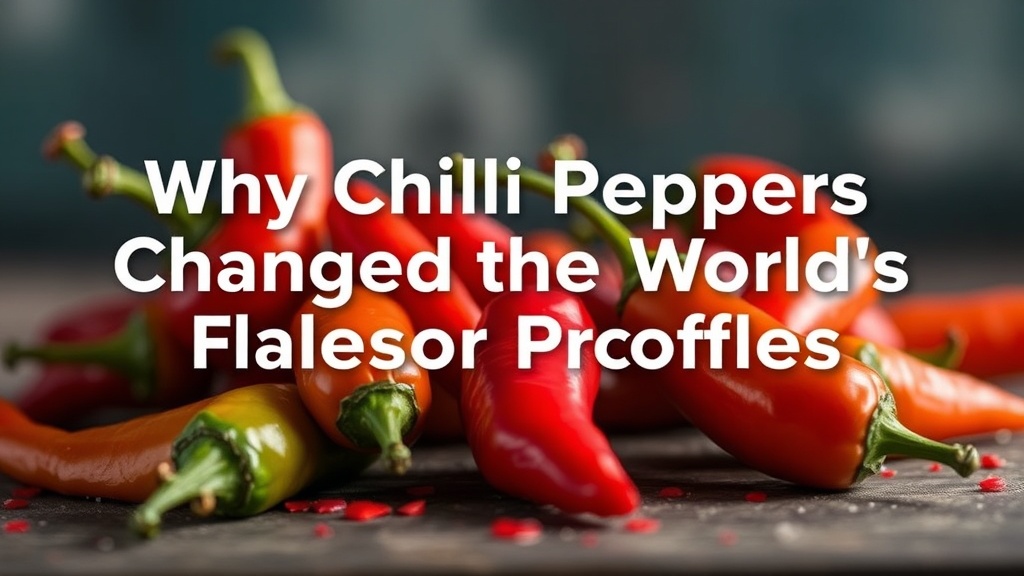
Why Chili Peppers Changed the World's Flavor Profiles

The Heat Map of Human History
A single plant species, Capsicum annuum, has fundamentally altered the sensory experiences of billions of people in less than five centuries. Before the late 15th century, the concept of "heat" in many global cuisines was limited to black pepper, ginger, or long pepper. The arrival of the chili pepper—a botanical traveler from the Americas—didn't just add spice; it rewrote the culinary DNA of entire continents, from the spice markets of India to the street food stalls of Sichuan.
Understanding this shift helps us see why certain flavors feel "right" in specific regions. When we eat a spicy curry or a fiery Sichuan dish, we aren't just tasting heat; we're tasting the results of a global botanical exchange that happened with startling speed. This movement of plants via trade routes changed how humans perceive pungency and how we preserve food through chemical irritation.
To understand the impact of the chili, we must look at how it integrated into existing traditions. It wasn't a slow creep; it was an explosion. The chili pepper arrived in the East via Portuguese and Spanish maritime routes, quickly replacing or augmenting local spices that were often more expensive or harder to cultivate. This accessibility is what made the chili a true global citizen.
Where Did Chili Peppers Originally Come From?
The history of the chili pepper is a story of movement. While we associate certain chilies with specific regions now, their origins are rooted in the Americas. Specifically, the domesticated varieties we recognize today trace back to the regions of Central and South America. Botanical records suggest that various species of Capsicum were cultivated by indigenous populations in Mexico and Peru long before any European contact.
When Christopher Columbus reached the Caribbean, he wasn't looking for chilies; he was looking for black pepper (Piper nigrum). He mistakenly labeled the heat of the chili as a substitute for the much more expensive peppercorns used in European courts. This misnomer stuck, and the "pepper" name remains even though the biology is entirely different. For more detailed botanical histories, you can explore the Britannica botanical archives.
As these plants traveled, they adapted. The Habanero, for instance, found a home in the tropical climates of the Caribbean and the Yucatan, developing a fruit profile that is both fruit-forward and intensely hot. Meanwhile, the Serrano and Jalapeño became staples of the Mexican pantry, serving as the backbone for salsas and much of the regional heat. This adaptation proves that a plant's success isn't just about its flavor, but how well it integrates into the local soil and culture.
How Do Different Types of Chilies Affect Flavor?
Not all heat is created equal. The chemical compound responsible for that burning sensation is capsaicin, and its concentration varies wildly between varieties. This isn't just about how much a dish hurts your tongue; it's about the nuance of the flavor profile that sits beneath the heat. A great cook knows that a chili is a seasoning, not just a heat source.
- Smoky Heat: Varieties like the Chipotle (smoked Jalapeño) offer a deep, earthy quality that works beautifully in stews and braises.
- Bright & Fruity: The Aji Amarillo from Peru provides a sunshine-colored heat that is more about flavor than pure pain.
- Sharp & Immediate: The Thai Bird's Eye chili provides a piercing, high-frequency heat that hits the palate quickly and disappears, making it perfect for stir-fries.
- Complex & Deep: The Guajillo chili, often used in Mexican moles, offers a mild, raisin-like sweetness that builds slowly.
When you are selecting a chili for a recipe, don't just look at the Scoville scale. Ask yourself: Do I want the heat to be the star, or do I want it to be a background note that enhances the meat or vegetable? If you're looking for a deep dive into the chemical properties of capsaicin, the ScienceDirect database offers extensive studies on how it interacts with human receptors.
Can You Use Dried Chilies Instead of Fresh?
This is a common question in kitchens where fresh produce might be seasonally limited. The short answer is yes, but the application changes. Dried chilies have had their moisture removed, which concentrates their sugars and flavors, but it also changes their texture. You can't just toss a dried chili into a pan and expect the same result as a fresh one.
When using dried chilies, you'll often need to rehydrate them. This involves steeping them in hot water or simmering them in a liquid (like a stock or sauce) to soften the skins and release the oils. This process is essential for making smooth, flavorful pastes or sauces. If you skip this, you'll end up with chewy, unpalatable bits of skin in your dish.
| Chili Type | Form | Best Use Case |
|---|---|---|
| Jalapeño | Fresh | Salsas, Guacamole |
| Ancho | Dried | Chili Con Carne, Moles |
| Arbol | Dried | Infused Oils, Spicy Sauces |
| Fresno | Fresh | Pickling, Garnishes |
One thing to remember: dried chilies often have a more concentrated, fermented-feeling flavor. While a fresh chili might provide a bright, acidic pop, a dried chili provides a grounded, savory depth. This is the difference between a bright summer salsa and a slow-cooked winter stew.
The cultural footprint of the chili is massive. In many ways, it has become a way to identify a culture's identity. To eat a dish without a hint of spice in a region like Andhra Pradesh or Oaxaca would feel fundamentally wrong to the people living there. The chili is no longer an "addition" to these cuisines; it is the foundation. Whether you're using a tiny amount of cayenne to add a whisper of warmth or a handful of habaneros to push your limits, you're participating in a centuries-old global exchange of heat and flavor.