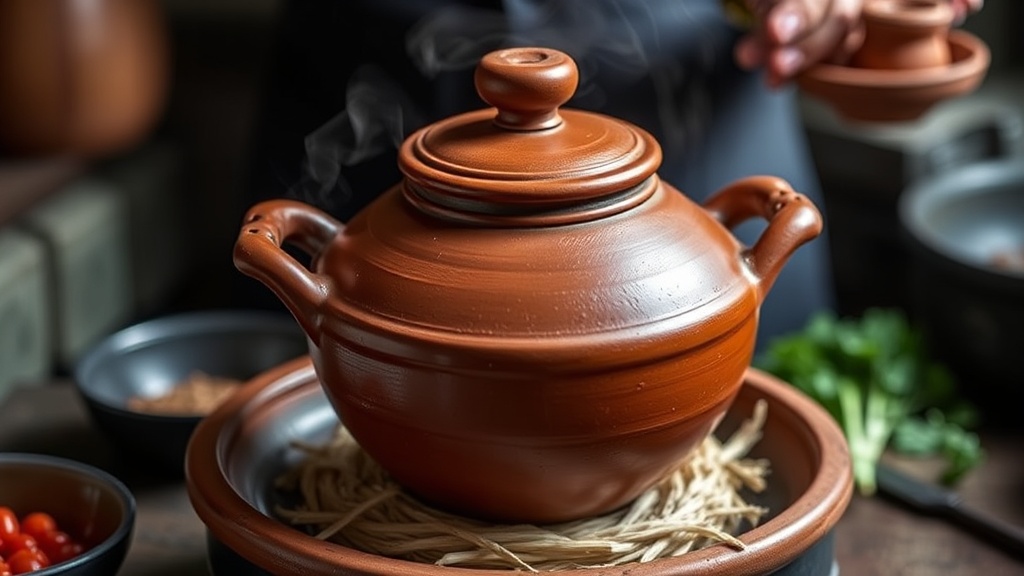
Why Every Cuisine Has Its Own Version of the Clay Pot—and How to Use Yours

What makes clay pot cooking different from other methods?
Walk through any market in Morocco, Japan, or Mexico and you'll notice something striking—every culture has its own distinct clay cooking vessel. From the tagine with its conical lid to the Japanese donabe and the Mexican cazuela, these unglazed or partially glazed pots aren't decorative afterthoughts. They're the result of centuries of refinement, shaped by local clay deposits, fuel availability, and the specific dishes each culture holds dear. The question isn't whether clay pot cooking works—it's why this ancient technique persists in an age of induction cooktops and pressure cookers.
The answer lies in what clay does that metal cannot. Unglazed earthenware breathes. It absorbs moisture during cooking and releases it slowly, creating a humid environment that keeps proteins tender and vegetables succulent. The porous material distributes heat gently and evenly, eliminating the hot spots that scorch delicate sauces in metal pans. When you lift the lid of a properly seasoned clay pot, you're experiencing the same steam and aroma that greeted cooks in ancient Rome, Tang dynasty China, and pre-Columbian Peru. That continuity matters—especially when you're trying to recreate authentic flavors that developed specifically around these vessels.
Which clay pot should you buy for your kitchen?
Before you impulse-buy the first terracotta pot at the garden center, understand that cooking-grade clayware differs fundamentally from decorative ceramics. Food-safe clay pots use specific clay bodies fired at temperatures that create durability without toxic additives. Lead-glazed decorative pieces can leach harmful compounds when heated—stick to reputable kitchen brands or cookware imported through food-grade channels.
For beginners, the Spanish cazuela offers the most versatility. These shallow, wide-bottomed pots work on stovetop (with a diffuser), in the oven, and even over charcoal. Their glazed interiors resist staining and don't require the extended seasoning process of fully unglazed pots. A 10-12 inch cazuela handles paella, baked fish, braised chicken thighs, and even crusty bread with equal competence. Serious Eats offers a comprehensive breakdown of how different clay compositions affect cooking performance.
If you're drawn to Asian cuisines, the Japanese donabe represents the pinnacle of single-pot cooking. These thick-walled vessels heat slowly but retain temperature remarkably well—ideal for hot pots, rice dishes, and stews that benefit from gentle, sustained heat. The donabe's heavy lid creates a seal that mimics pressure cooking without the mechanical complexity. Brands like Nagatani-en have produced these pots in the Iga region for centuries, using clay with naturally high petalite content that withstands thermal shock better than standard earthenware.
For North African and Middle Eastern cooking, the Moroccan tagine remains unmatched. The distinctive conical lid isn't decorative—it creates a convection cycle where steam rises, condenses on the cool interior of the lid, and drips back down onto the food. This self-basting mechanism allows you to braise meat with minimal added liquid, concentrating flavors in ways that conventional pots cannot replicate. A proper tagine requires patience—you'll need to season it over several uses, gradually building up a patina that prevents sticking and adds subtle earthy notes to each dish.
How do you season and maintain a clay pot?
New clay pots arrive thirsty. The unglazed interior has microscopic pores that will absorb oil, moisture, and eventually food particles—this isn't a flaw, it's the feature that makes clay cooking special. But you need to prepare the vessel properly or risk cracking, sticking, or off-flavors in your first attempts.
Start by soaking the pot—both base and lid—in water for at least 30 minutes before first use. This saturates the clay and prevents thermal shock when heat is applied. After soaking, rub the interior with a cut clove of garlic (the traditional method) or a thin layer of neutral oil. Fill the pot three-quarters full with water, bring to a gentle simmer, and let it cool naturally. Some cooks repeat this process several times, though modern food-grade clayware often requires just one seasoning cycle.
Temperature management becomes critical with clay. Never transfer a cold clay pot directly onto high heat—thermal shock will crack even high-quality vessels. Start with low heat and increase gradually. Similarly, never plunge a hot clay pot into cold water. These aren't hard-anodized aluminum workhorses; they demand the same respect you'd give a cast-iron skillet or carbon steel pan.
Cleaning requires restraint. Soap penetrates unglazed clay and lingers, tainting future dishes. Instead, scrub with hot water and a natural bristle brush. For stubborn residue, boil water in the pot with a handful of baking soda, then scrape gently with a wooden spoon. Always dry clay pots thoroughly—upside down on a towel, ideally in a warm spot with good air circulation. Stored damp, they'll develop mustiness or mold that requires aggressive re-seasoning to eliminate. The Kitchn provides excellent maintenance guidance for keeping these vessels in cooking condition for decades.
What dishes work best in clay pots?
Clay pots excel where moisture retention and gentle heat matter most. Braised short ribs, osso buco, and lamb tagine develop silken textures that metal pots struggle to replicate. The steady, even heat renders connective tissue without the violent bubbling that can toughen meat fibers. Rice dishes—particularly Persian tahdig, Spanish arroz, and Japanese takikomi gohan—develop the coveted crispy bottom layer because clay maintains consistent contact heat without scorching.
Vegetables transform in clay. Root vegetables braised with butter and stock absorb flavors while maintaining structural integrity. Whole heads of garlic roast to spreading consistency without drying out. Even simple dishes—potatoes with rosemary, fennel with orange—develop deeper flavors because the clay environment concentrates aromatics rather than letting them escape as steam.
Fish and seafood benefit enormously from clay cooking. The moist environment prevents the dryness that plagues oven-baked fish. Whole fish stuffed with herbs, mussels in white wine, and shrimp in garlic oil all cook more evenly in clay, with the vessel's thermal mass maintaining temperature when you lift the lid to check doneness. Bon Appétit's collection of clay pot recipes demonstrates the technique's remarkable range across proteins and cuisines.
Bread baking in clay has experienced a revival among home bakers. Preheated clay pots mimic professional steam-injected ovens, creating the crackling crusts associated with European artisan loaves. The method is forgiving—place shaped dough into a hot pot, cover, and bake before removing the lid for final browning. The results rival expensive Dutch ovens at a fraction of the cost.
Why does food actually taste better from clay?
There's science behind the subjective experience that clay-cooked food tastes somehow more authentic, more grounded. The alkaline nature of earthenware interacts with acidic ingredients, subtly moderating sharpness in tomato-based sauces and wine reductions. The slow, even heating allows Maillard reactions—the browning that creates complex flavors—to proceed gradually, developing depth without bitterness.
Perhaps more importantly, clay cooking demands patience. You cannot crank the heat and rush a clay pot dish; the vessel simply won't allow it. This enforced slowness changes how you cook. You pay attention. You adjust seasoning gradually. You learn when the pot has reached the right temperature by the sound of the simmer, the rhythm of the steam escaping around the lid. That attentiveness translates to better food, regardless of the vessel.
The historical connection matters too. When you cook cassoulet in a cazuela or miso soup in a donabe, you're participating in an unbroken chain of cooks stretching back millennia. The flavors that developed in these pots shaped cuisines, influenced migrations, and sustained communities through hardship and celebration. Understanding that context—feeling it in your hands as you lift a heavy clay lid—changes how you experience the food you create. And that, ultimately, is why these ancient vessels deserve space in modern kitchens.