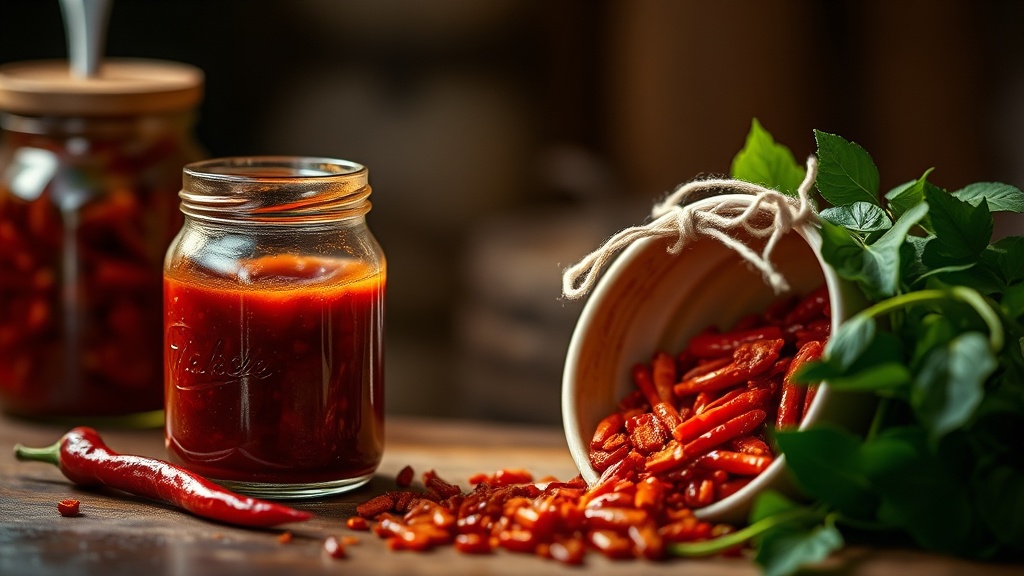
Why Fermented Chili Paste Is Not Just a Condiment

The Misconception of Heat
Most people assume that fermented chili paste is simply a way to add heat to a dish. They see it as a shortcut to spice, a pungent addition meant to burn the tongue and mask weaker flavors. This view misses the point entirely. In many culinary traditions—from the fermented bean pastes of East Asia to the funky, aged chilis of West Africa—fermentation isn't about the heat; it's about the development of complex acidity, umami, and a deep, lingering savory profile that heat alone can't achieve. When you eat a well-aged chili paste, you aren't just tasting pepper; you're tasting time, bacteria, and the transformation of simple sugars into something far more nuanced.
A true fermented paste relies on more than just high-quality peppers. It requires a controlled environment where salt, microbes, and time dance together. This isn't a quick process. While a standard hot sauce might be bottled a few weeks after production, a traditional fermented paste might sit in a ceramic crock for months, or even a year, as it undergoes a slow metamorphosis. This process breaks down the cellular structure of the peppers and integrates the flavors of the aromatics—garlic, ginger, or fermented shrimp—into a singular, cohesive identity.
How Does Fermentation Change the Flavor of Chilis?
To understand the shift, we have to look at the chemistry of the pepper itself. Raw chilis contain capsaicin, the compound responsible for that stinging sensation. During fermentation, lactic acid bacteria (LAB) become the primary actors. These bacteria consume the natural sugars in the peppers and convert them into lactic acid. This acid provides a bright, sharp tang that cuts through richness, much like a squeeze of lime or a dash of vinegar, but with a much more integrated, rounded mouthfeel. Instead of a sharp, one-dimensional sting, the heat becomes a background hum that supports the savory notes.
The texture changes too. A fresh chili paste might be gritty or watery, but a fermented version gains a certain viscous, silky quality. This is due to the breakdown of plant fibers and the production of exopolysaccharides by the bacteria. If you've ever wondered why some high-end fermented pastes feel more like a rich sauce than a condiment, it's because the fermentation has fundamentally altered the physical structure of the ingredients. You can learn more about the biological processes of fermentation through resources like the ScienceDirect database, which provides deep dives into how microbes transform raw ingredients.
| Stage of Fermentation | Flavor Profile | Texture |
|---|---|---|
| Early (1-2 Weeks) | Sharp, acidic, bright chili heat | Watery, slightly grainy |
| Mid (1-3 Months) | Balanced acidity, mellowed spice | Thicker, more cohesive |
| Aged (6+ Months) | Deep umami, complex funk, low heat perception | Silky, rich, viscous |
What Are the Best Ways to Use Fermented Chili Paste?
Because these pastes are so concentrated, they shouldn't be treated like a standard hot sauce. You wouldn't drench a delicate piece of grilled fish in a heavy, aged Doenjang-style chili paste, as the funk might overwhelm the subtle sweetness of the seafood. Instead, think of them as a way to build layers. A dollop in a braising liquid can add a backbone of savory depth that stays with the dish long after the heat has faded. They work exceptionally well in slow-cooked stews, where the long cooking time allows the fermented elements to meld with the proteins and fats.
In a home kitchen, you can use these pastes to brighten up simple stir-fries or as a base for a marinade. Because the acidity is already present, you might find you need less vinegar or citrus in your recipe. For a more technical application, try using it as a component in a pan sauce. A small amount of fermented paste whisked into a finished butter or oil can create a complex, savory coating for roasted vegetables or proteins. The goal isn't to make the dish "spicy," but to make it "deep."
Is Making Fermented Chili Paste Difficult at Home?
The short-term answer is no, but the long-term answer is that it requires patience and vigilance. The biggest risk isn't failure, but contamination. You aren't just making food; you are managing an ecosystem. If your salt concentration is too low, or if your equipment isn't properly sanitized, you might invite the wrong kind of bacteria into the jar. This is why many professional chefs and enthusiasts rely on precise measurements and controlled environments. You aren't just throwing things in a jar and hoping for the best; you are setting the stage for a biological event.
If you are serious about starting, I recommend reading up on the King Arthur Baking principles regarding fermentation and hydration, as many of the foundational rules for sourdough or vegetable ferments apply here. You'll need a clean, airtight vessel—glass or ceramic is best—and a way to keep the solids submerged under the liquid (the brine). If the peppers stay exposed to the air, you're inviting mold. It's a meticulous process, but the reward is a condiment that is uniquely yours, possessing a profile that no store-bought bottle can replicate.
When you start experimenting, don't try to do everything at once. Start with a simple brine and a single type of chili. Observe how the scent changes from day one to week four. Notice how the heat softens. This observation is where the real learning happens. You'll begin to see that the heat is just the surface-level expression of a much more complex, living thing that you've helped create. This isn't just a recipe; it's an exercise in understanding the passage of time through the lens of flavor.