Why Spring's Best Food Destinations Are Already Disappearing

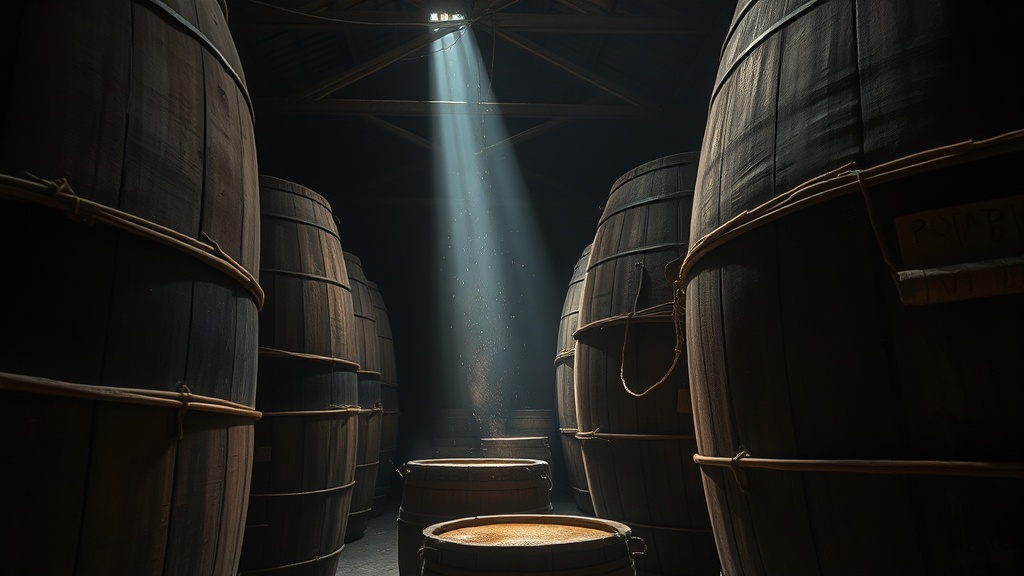
I was in Phu Quoc in late February 2019, a few weeks before the season really accelerated, and I watched a woman named Bà Hoa rotate barrels of cá cơm — anchovies — that had been sitting in salt since October. The fish were seven months into a twelve-month fermentation cycle. The barrel wood had absorbed decades of brine. The warehouse smelled like the ocean and something older than the ocean. She told me her family had worked this process for four generations.
I went back in April, peak season. What I found, and this is my own observation from a single visit, was that the warehouse had three tour groups walking through it. The fermentation barrels were the same, but the operation had added a gift shop, a tasting station, and a "traditional fish sauce making demo" that compressed the process into forty-five minutes. The demo used product that Bà Hoa told me was six weeks old, not twelve months. Her granddaughter — who had been learning the twelve-month process — was running tours for groups of tourists at rates that made the economics immediately legible.
This is not a story about bad people making bad choices. The economics were obvious. This is a story about what spring tourism actually costs, measured in units that don't appear on any balance sheet.
The Problem Is the Math, Not the Malice
Here's what happens to a traditional restaurant when tourist volume doubles in eight weeks.
A family restaurant in Hội An — not a tourist trap, a real neighborhood place — might serve a few dozen covers a day through winter. Their fermented preparations take days at minimum. Their house-made chili paste ferments for weeks. Their broth involves bones that have been simmering since yesterday morning.
Then April hits. Suddenly they're pushed toward well over a hundred covers a day. The long-fermented vegetables become a same-day quick-pickle with rice vinegar. The chili paste gets replaced by a commercial supplier — not because the family gave up, but because there are only so many hours. The broth gets replaced by a commercial base because no one has time to babysit a stockpot when they're also managing a queue out the door.
The tourists eating there in April are not eating the food that made the restaurant famous. They're eating an approximation of it. They'll go home and tell people they had "authentic Vietnamese street food," and they'll be wrong, and neither the restaurant owner nor any food scholar who might have documented the original practices can easily correct the record — because the original practices are already in the process of changing.
This isn't negligence. It's survival math. A restaurant operating at volume needs to simplify, standardize, and source commercially or it physically cannot function. The peak-season revenue is genuinely necessary — it funds the rest of the year. The traditional technique becomes economically irrational the moment volume crosses a certain threshold.
What gets lost is not just flavor. It's knowledge. Fermentation is a practice, not a recipe. You learn it by doing it, by making mistakes, by inheriting the specific microbial culture in your grandmother's crock that produces a flavor no commercial supplier can replicate. When the daughter runs tours instead of learning the barrels, that knowledge has nowhere to go.
The Korean Banchan Economy
Seoul is a useful case study because the economics are structurally visible.
Traditional Korean banchan — the small fermented and pickled side dishes that accompany every meal — are labor-intensive. A grandmother-run restaurant in a residential neighborhood might produce six to ten banchan in-house. That means dedicated fermentation vessels, specific regional recipes, labor hours that don't scale.
The cost differential between handmade and commercially supplied kimchi at restaurant scale is significant — operators I've spoken with in Seoul describe a gap that makes handmade product defensible at low volume and nearly impossible to justify at tourist-season volume. The math is roughly: the more covers you're running, the more a centralized supplier looks rational, because the labor overhead of in-house fermentation doesn't compress the way many kitchen tasks do.
Seoul's tourist corridors have largely worked through this calculation. The banchan at many Insadong and Myeongdong restaurants is now centrally produced and delivered. It is consistent, inoffensive, and technically Korean. It is not what banchan is supposed to be.
What disappears isn't just the taste of the specific restaurant's kimchi. What disappears is the grandmother's recipe — the specific combination of fermentation time and salt ratio and regional pepper variety that her mother taught her and that existed nowhere else. When the central supplier takes over, that recipe has no economic reason to persist. Food scholars who track culinary heritage have noted this pattern in Korean food culture, where distinctive regional banchan traditions can erode quickly under sustained commercial pressure — though the full extent of what's been lost is, by nature, difficult to document precisely.
The tourists who accelerated this aren't villains. They wanted to experience Korean food culture. They got a serviceable simulacrum of it, and the practices that made the original distinct were reshaped partly in response to their arrival.
Documentation Lag: Why We're Always Too Late
Here's what I learned from teaching history for a decade: primary sources get destroyed before anyone thinks to preserve them.
The food anthropology community has a documentation lag problem that's structurally similar to archive loss. Researchers typically arrive in a food region after it's already become interesting — which means after tourism has already started reshaping it. By the time a food scholar is documenting a fermentation practice, the practice is often already in the process of being simplified or abandoned. The scholarly record tends to capture the decline, not the peak.
The Oaxacan mezcal production traditions are a useful example outside Asia. Traditional producers using clay pots (olla de barro) and specific regional agave varieties were doing something genuinely distinct from even other artisan mezcal. The terroir argument is real — microbial cultures associated with specific clay and specific production environments generate flavor compounds that differ from stainless or copper production. This is documented; the science on terroir and fermentation vessel microbiology is real, even if the specific claims about any individual producer's clay are harder to verify.
Then mezcal became fashionable. Tourist infrastructure followed. Production economics shifted. The olla de barro process is slow and low-yield. Copper alembics are faster. Some regional agave varieties — wild plants that can take decades to mature — became expensive relative to faster-cultivated alternatives. The specific regional practices that produced the distinctive flavor are now in a scholarly literature that remains thin relative to what was likely present, and the producers carrying those traditions tend to be an aging cohort.
The tourists drinking mezcal in Oaxaca in 2026 are mostly drinking something that exists because tourism made mezcal financially viable at scale — which also made the specific micro-traditions that generated the original interest harder to sustain economically.
The thing kills the thing it loved. That's not a moral failure. It's just what tends to happen when volume economics hit artisan practice.
What Actually Still Exists (And How to Find It)
I'm going to give you the unsexy answer, because the sexy answer would be a list of restaurants, and by the time you read this, the list would be wrong.
The practices that still exist are in places where tourism has not yet made volume economics kick in. That means:
Off-season, off-corridor, off-language. The restaurant that doesn't have a translated menu. The market stall that isn't in any listicle. The neighborhood that's thirty minutes from the hotel district. This isn't romanticizing inconvenience — it's recognizing that inconvenience is the only remaining economic filter. If it's easy to get to, it has already adapted to the people who found it easy to get to.
Ask about time. The single best question you can ask a food producer or chef is how long something takes. Not "how do you make this" — everyone has an answer to that. Ask: "How long does this take?" A six-week-fermented product is not the same as a six-month-fermented product, and the producer who answers with specificity is usually the producer who still has something real. The one who gets vague is usually the one who switched to a commercial supplier and isn't proud of it.
Find the person who supplies the restaurant, not the restaurant. The night market vendor who sells to the family restaurant at 6am before tourists are awake. The farmer growing the specific pepper variety. The grandparent's generation doing something that doesn't have a front-of-house. These people exist. They're just not on any app.
Eat badly, off-menu, at weird hours. Not Instagram badly — actually badly. The soup that's a little sour because the fermentation is working. The rice that's sticky in a way that isn't perfectly calibrated. The vegetable pickle that's aggressively funky because it's been sitting for weeks in a crock in someone's back room. This is what authentic actually tastes like. It doesn't taste like a curated culinary experience. It tastes like someone's family recipe that was developed without any consideration for whether you would enjoy it.
The Honest Accounting
Spring break starts in two weeks. Right now, restaurant owners in Chiang Mai and Hội An and Oaxaca and Tbilisi are making decisions about their spring menus — what to simplify, what to outsource, how to manage the volume surge. Those decisions are rational. The economics are real. The family needs to eat.
What I want you to understand is that when you book a "culinary experience" in April, you are arriving at the tail end of a set of compromises that started weeks before you landed. The thing you're seeking — the authentic food culture — has already partially reorganized itself around your arrival. The better the marketing, the more thoroughly it's been reorganized.
The fermentation tradition that took four generations to develop and gets replaced by a supplier's contract in one tourist season — that's a loss in the same category as a language dying, a craft technique going undocumented, a lineage of knowledge ending.
Bà Hoa still does twelve-month fish sauce. I know because I stayed in touch. Her daughter runs the tour operation; her son does the fermentation. They found a way to keep both going. But she told me two years ago that she's the last one in her village doing the twelve-month process. Everyone else switched to six weeks because of the volume pressure.
Six-week fish sauce is fine. It doesn't taste like hers. It doesn't taste like decades of a specific barrel's accumulated microbial culture. It doesn't taste like knowledge.
That's what's disappearing. Not the food. The knowledge underneath the food.
Go find the version that still has the knowledge in it. It's out there. It's just not where the spring tourism brochure says to look.