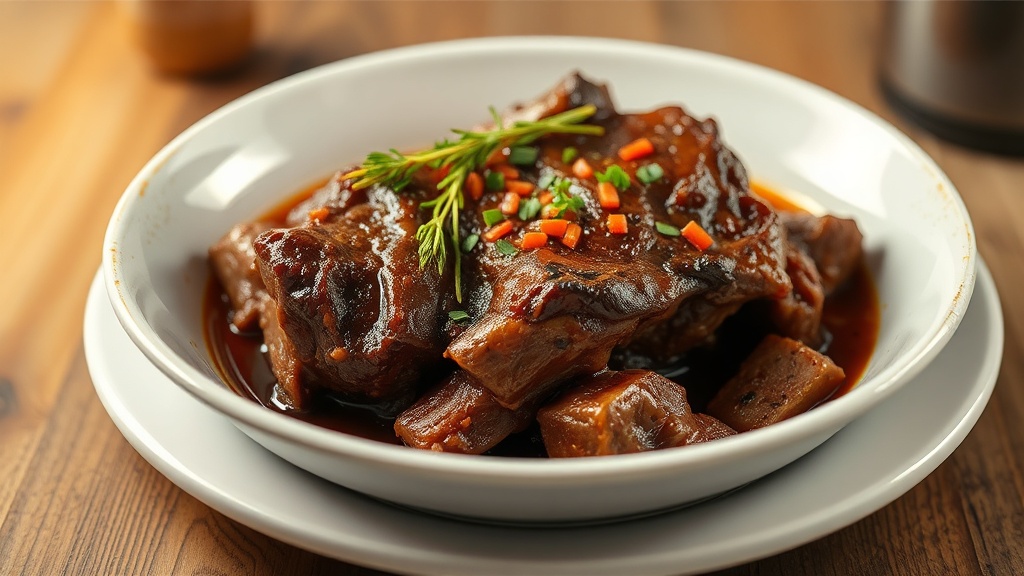
Why Your Braised Meat Turns Out Dry Despite Hours of Cooking

The Temperature Mistake Most Home Cooks Make
Most people think braising is foolproof—that low, slow heat will eventually break down any tough cut into fork-tender perfection. The truth is more complicated (and more interesting). Braising is a dance between time and temperature, and getting it wrong means stringy, dry meat sitting in a pool of delicious liquid it can't absorb. The collagen-to-gelatin conversion that makes braised dishes so satisfying happens in a narrow window—around 160°F to 205°F—and staying in that zone too long or overshooting it can ruin even the best ingredients.
After two years working the line in professional kitchens, I watched sous chefs treat braising with the same precision they'd apply to a sauté. They weren't guessing. They understood that braising isn't just "throw it in the oven and wait." It's controlled heat application with a specific goal: transforming tough connective tissue into silky richness without driving out all the moisture.
What's the Difference Between Braising and Stewing?
Here's where it gets interesting from a historical perspective. Braising developed as a technique for wealthy households with access to large cuts of meat and dedicated hearth space. Stewing emerged from necessity—smaller pieces cooked in whatever vessel was available. The French formalized this distinction in the 17th century, with braising (braiser) specifically referring to cooking large cuts partially submerged in liquid, while stewing (ragoût) meant fully submerged, smaller pieces.
The technique traveled with colonization and trade. Vietnamese thịt kho uses the same principles as French braising—caramelized sugar, gentle heat, time—because French cooks brought their methods to Indochina. Meanwhile, Mexican barbacoa evolved independently, using underground heat and agave leaves instead of cast iron and stock. Both achieve the same result through different means.
Technically, the difference matters because surface area changes everything. A whole beef chuck roast (braising) retains moisture differently than cubed beef (stewing). The larger mass takes longer to heat through, giving collagen more time to convert before the outer meat overcooks. When you cube meat first, you're exposing more surface area to heat stress—and that's where dryness creeps in.
How Do You Keep Braised Meat Moist During Long Cooking?
The secret isn't more liquid—it's controlling evaporation and temperature stability. Professional kitchens use combi ovens or tightly sealed braising pans for a reason. At home, your Dutch oven lid isn't enough. Here's what actually works:
Create a better seal. A layer of parchment paper cut to fit your pot, pressed directly onto the meat and liquid before adding the lid, dramatically reduces evaporation. This old restaurant trick (called a cartouche in French cooking) keeps the surface from drying out and forming that unappealing gray crust. It also prevents the liquid level from dropping too quickly.
Don't peek. Every time you lift that lid, you lose heat and moisture. The oven needs 10-15 minutes to recover. If you're braising for three hours and you check three times, you've added nearly an hour of extra cooking time—and stressed the meat unnecessarily. Use an oven thermometer and trust your timing.
Rest the meat in the liquid. This is the step most recipes skip. Once your braise reaches temperature (about 195°F internal for beef, 190°F for pork), turn off the heat and let it sit, covered, for 30-45 minutes. The meat relaxes, reabsorbs some liquid, and becomes easier to slice without shredding. Try slicing brisket straight from the oven versus letting it rest—you'll see the difference immediately.
Which Cuts Work Best for Braising (and Why)?
Not all tough cuts are created equal. The best braising meats have high collagen content distributed through the muscle, not just in external fat. Beef chuck, short ribs, and oxtail shine because they contain enough intramuscular connective tissue to self-baste as it renders. Pork shoulder works beautifully. Lamb shanks are practically designed for this treatment.
What you want to avoid are lean cuts with little connective tissue—beef tenderloin, pork loin, chicken breast. Without collagen to convert, these simply dry out. The muscle fibers tighten, squeeze out moisture, and you end up with expensive shoe leather.
Here's a practical test: look for meat that holds its shape when raw but yields noticeably when squeezed. That resistance comes from collagen. If it feels mushy or soft, it's mostly fat and water—fine for quick cooking, terrible for braising. If it feels like a rock with no give, it's all muscle fiber—also wrong for this technique.
The Liquid Ratio That Actually Matters
Recipes love specifying exact liquid amounts—"add two cups of stock"—but the depth matters more than the volume. Your liquid should come roughly halfway up the meat, not submerge it completely. This creates two cooking environments: the submerged portion braises gently in liquid, while the exposed portion steams in the humid oven atmosphere. That combination builds complexity you can't get from stewing.
The liquid itself carries history. Red wine braises echo medieval European cooking, when wine was safer than water and acidity helped preserve meat. Coconut milk curries in Southeast Asia use fat content and gentle heat the same way—richness without burning. Even Coca-Cola braising (popular in the American South) works because the sugar caramelizes and the acid tenderizes, much like wine.
Acidity matters more than most cooks realize. A splash of vinegar, tomato, or citrus doesn't just add flavor—it helps break down collagen faster. But too much acid too early can "cook" the surface of the meat, creating a barrier that prevents proper browning. Add acidic ingredients after the initial sear, not before.
Why Does My Braised Meat Fall Apart When I Slice It?
This is the complaint I hear most often: "It tasted great but fell apart when I tried to serve it." The cause is almost always cooking too hot or too long, not the recipe itself. When collagen fully converts and keeps heating, the muscle fiber structure loses all integrity. The meat becomes tender to the point of disintegration.
There's a sweet spot—when a fork slides in with slight resistance but the meat still holds its shape. For most beef cuts, this happens around 195-200°F internal temperature. Pork can handle slightly higher, 200-205°F. Invest in a reliable instant-read thermometer and check early. You can always cook longer; you can't un-cook shredded meat.
Another factor: cutting against the grain. Even perfectly braised meat will seem stringy if you slice with the muscle fibers. Look at the direction of the grain before cooking (it becomes harder to see afterward) and plan your cuts. Short ribs should be sliced between the bones. Chuck roast needs cross-grain slices about half an inch thick.
"Good braising isn't about time—it's about transformation. You're not waiting for the clock; you're waiting for the chemistry."
The beauty of braising is its forgiving nature when done right. Unlike sautéing or grilling, where seconds matter, braising operates on a broader timeline. But that forgiveness has limits. Understanding where those limits lie—and why they exist—separates competent home cooking from food that makes people stop mid-bite and ask how you did it.
Start with a well-marbled chuck roast, brown it properly (this isn't optional—Maillard reaction creates flavor), add aromatics and liquid halfway up the sides, cover tightly, and cook at 300°F until it reaches temperature. Then wait. Rest it. Slice it carefully. The result should hold together on the plate but yield completely to a fork—no knife needed, but no falling apart either. That's the difference between braising and just cooking something for a long time.