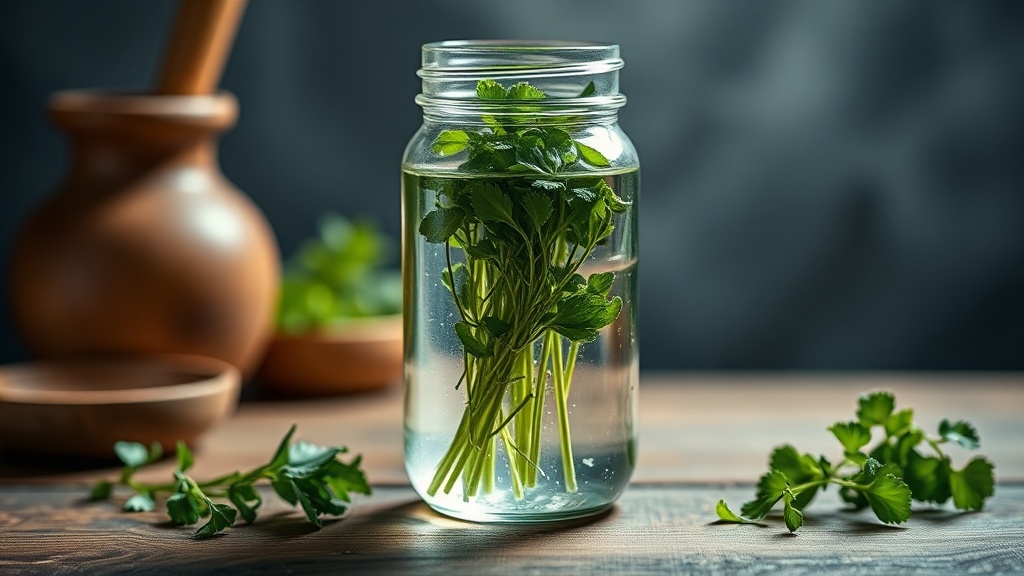
Keep Your Herbs Fresh with the Water Jar Trick

Quick Tip
Treat soft herbs like cut flowers by placing stems in a jar of water and covering the tops loosely with a plastic bag.
You buy a beautiful, fragrant bunch of basil or cilantro, only to find a slimy, blackened mess in your crisper drawer three days later. It’s a frustrating waste of money and flavor. This technique—treating your herbs like a bouquet of flowers—is the most effective way to extend their shelf life by up to two weeks.
How Do You Store Herbs in Water?
To store herbs in water, trim the bottom of the stems and place them in a jar with about an inch of fresh water. You'll want to treat soft herbs and hard herbs slightly differently to ensure they don't rot. For example, cilantro and parsley love a constant water source, while woody herbs like rosemary generally prefer a dry environment.
Here is how to handle different varieties:
- Soft Herbs (Basil, Cilantro, Parsley): Trim the stems and place them in a jar of water. Keep the jar on your counter or in the fridge.
- Woody Herbs (Rosemary, Thyme, Sage): Keep these in a damp paper towel inside a reusable container or a zip-top bag.
- The Basil Exception: Basil is sensitive to cold. Leave it on the counter at room temperature rather than in the fridge (unless you want it to turn black).
I learned this the hard way while working in a high-volume kitchen. We used to go through massive amounts of herbs, and if the prep cook didn't treat the basil correctly, the entire batch was ruined by morning. It’s a small detail, but it makes a massive difference in your kitchen's efficiency.
Does the Type of Container Matter?
The type of container depends on whether you are storing the herbs on the counter or in the refrigerator. For herbs that live on the counter, a simple glass jar—like a standard Mason jar—works perfectly. For those that go in the fridge, you might want to cover the top with a plastic bag to maintain humidity without letting the leaves get soggy.
| Herb Type | Storage Method | Ideal Location |
|---|---|---|
| Basil | Water Jar | Countertop |
| Cilantro | Water Jar + Bag | Refrigerator |
| Rosemary | Damp Paper Towel | Refrigerator |
Worth noting: always use filtered water if your tap water has a heavy chlorine scent. High levels of chlorine can actually damage the delicate cell walls of the leaves. You can check your local water quality through the EPA website to see if it's something to watch out for.
How Often Should I Change the Water?
You should change the water every two days to keep the herbs fresh and prevent bacterial growth. If the water looks cloudy, swap it out immediately. A clean environment is the only way to prevent the stems from decaying. If you're curious about how different environments affect food preservation, you might enjoy reading about fermentation secrets, which deals with controlled bacterial environments.