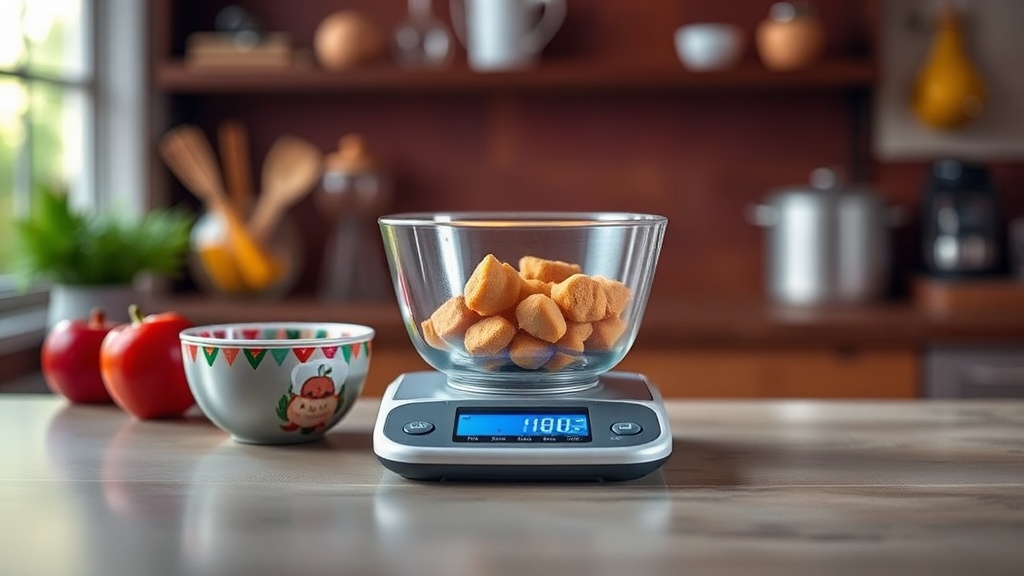
Why You Should Use a Digital Scale Instead of Measuring Cups

A single cup of all-purpose flour can weigh anywhere from 120 grams to 160 grams depending entirely on how it is scooped. This 33% margin of error is often the invisible culprit behind dry cakes, dense bread, or failed soufflés. This post explains why transitioning from volume-based measuring cups to a digital scale is the most effective way to ensure consistency, accuracy, and professional-grade results in your kitchen.
The Problem with Volume-Based Measurement
Measuring by volume—using cups and spoons—is a legacy of an era when precision was less accessible. While it remains common in casual home cooking, it relies heavily on human technique rather than objective truth. When you use a measuring cup, you are not measuring a fixed amount of an ingredient; you are measuring the space that ingredient occupies.
The density of ingredients changes based on several environmental and physical factors:
- Compaction: If you dip a measuring cup directly into a bag of flour, you pack the flour down, resulting in a much heavier weight than if you spoon the flour into the cup.
- Humidity: Ingredients like sugar and salt are hygroscopic, meaning they absorb moisture from the air. On a humid day in a coastal city like New Orleans, a cup of sugar will weigh more than it would in a dry climate like Phoenix.
- Particle Size: A cup of fine sea salt will pack much more tightly than a cup of coarse kosher salt, even if the volume looks the same.
- Aeration: Sifting flour introduces air, making it lighter and more voluminous. If a recipe calls for "1 cup of sifted flour," the weight will differ significantly from "1 cup of unsifted flour."
In professional environments, such as the high-volume bakeries I observed during my time in commercial kitchens, volume is almost never used for dry ingredients. Precision is a requirement for scalability and consistency.
Why Digital Scales Outperform Measuring Cups
A digital scale provides a definitive weight, which is an absolute value. A gram of salt is always a gram of salt, regardless of the humidity in your kitchen or the shape of the container you use to hold it. This level of precision is vital for several reasons.
1. Accuracy in Baking
Baking is a chemical reaction. The ratio of fats to proteins, and liquids to solids, determines the structural integrity of your bake. If you are making a delicate pastry, even a slight excess of flour can lead to a tough, heavy crust. Using a scale ensures that you are hitting the exact ratios required for chemical success. For example, when working with high-fat ingredients, knowing the exact weight is crucial for texture. If you are interested in perfecting your pastry technique, you may also want to read about why you should use cold butter for flaky pastries, as temperature and weight work together to create those essential layers.
2. Efficiency and Speed
Using a scale actually reduces the number of tools you need to wash and the time spent on prep. Instead of reaching for a teaspoon, a tablespoon, a 1/4 cup, and a 1/2 cup, you can use a single large mixing bowl. You place the bowl on the scale, hit the "tare" or "zero" button, add your first ingredient, hit tare again, and add the next. This "one-bowl method" streamlines the mise en place process significantly.
3. Consistency Across Batches
If you find a recipe you love and want to make it every weekend, a scale allows you to replicate that success perfectly. When you use volume, you are likely to vary the amount slightly every time you cook. By recording recipes in grams, you create a reliable blueprint that produces the exact same result every time.
How to Use a Digital Scale Properly
To get the most out of your scale, you need to understand a few basic functions and best practices. Most modern digital scales, such as those made by brands like OXO or Escali, include these essential features.
The Tare Function
The "Tare" button is your most important tool. It allows you to reset the scale to zero after placing a container on it. This means the scale will ignore the weight of the bowl and only measure the weight of the ingredient inside.
- Place your empty mixing bowl on the scale.
- Press the Tare button. The display should read "0".
- Add your first ingredient (e.g., 500g of flour) until the scale hits the target.
- Press Tare again. The display returns to "0".
- Add your second ingredient (e.g., 10g of salt) directly into the same bowl.
Understanding Units of Measurement
Most digital scales allow you to toggle between grams (g), kilograms (kg), ounces (oz), and pounds (lb). For cooking and baking, you should almost exclusively use grams. Grams are a metric unit of mass, providing the highest level of precision for small amounts. While ounces are common in the United States, they are often divided into fractions that can be difficult to read on a digital display. Grams allow for whole numbers, making it much easier to track small increments of spices or leavening agents.
Weight vs. Volume Conversions
While you can use a scale for everything, you should be aware that some ingredients are traditionally measured by volume for a reason. For instance, liquids like water, milk, or heavy cream have a density very close to 1g per 1ml. In these cases, a scale is incredibly accurate. However, for very light or irregular items like leafy greens or chopped herbs, volume might still be a practical way to estimate, though weight remains more accurate for the actual mass.
Common Mistakes to Avoid
Even with a scale, there are pitfalls that can lead to inaccurate measurements. Avoid these common errors to maintain precision in your cooking.
- Ignoring the "Zero" Step: Always ensure the scale reads zero before adding an ingredient. If you forget to tare the bowl, your entire recipe will be off by the weight of the container.
- Using an Unstable Surface: A digital scale must be placed on a flat, level, and hard surface. If you place your scale on a silicone baking mat or a slightly uneven countertop, the sensor may give erratic or incorrect readings.
- Overloading the Capacity: Every scale has a maximum weight capacity. If you are trying to weigh a 5kg bag of flour on a scale designed for small kitchen tasks, you will damage the load cells and get inaccurate results.
- Measuring While the Scale is Moving: Wait for the numbers to stop flickering before you consider the measurement complete. Digital sensors take a moment to stabilize after an ingredient is added.
When to Stick to Volume (The Exceptions)
While I advocate for the scale in almost every scenario, there are a few instances where volume is acceptable or even standard. For example, when measuring certain types of spices or small amounts of liquid in a pinch, a set of measuring spoons is often faster and more intuitive. If you are making a quick vinaigrette and need a splash of Dijon mustard, a teaspoon is perfectly functional. However, if you are making a complex emulsion or a large batch of a spiced rub, the scale remains the superior choice.
When it comes to seasoning, precision is still key. Even a few extra grams of salt can ruin a dish. This is why it is helpful to understand how different salts behave; for example, you can learn more about why you should use high quality salt for seasoning to ensure your weight-based measurements are actually working in your favor.
Essential Equipment Checklist
If you are ready to upgrade your kitchen, you do not need an expensive industrial machine. A reliable digital kitchen scale is an affordable investment. Look for the following specifications when purchasing:
- High Precision: Look for a scale that measures in increments of 0.1g or 1g.
- Tare Function: This is non-negotiable for efficient cooking.
- Large Display: An easy-to-read LCD screen is helpful when you are in the middle of a busy cooking session.
- Battery/USB Powered: Ensure it is easy to power, as you will be using it frequently.
- Capacity: A scale that can handle at least 5kg (approx. 11lbs) will be useful for larger batches of dough or grains.
By moving away from the guesswork of measuring cups and embracing the precision of a digital scale, you are taking a significant step toward culinary mastery. You are no longer relying on how much space an ingredient takes up, but on the actual mass of the food itself. This shift in mindset—from volume to weight—is what separates a hobbyist from a disciplined cook.
Steps
- 1
Zero out your scale with an empty container
- 2
Add ingredients one by one to avoid mistakes
- 3
Check for accuracy with a known weight